
Can a Pinterest Scheduler Manage Multiple Boards?
Managing a successful Pinterest presence can become difficult when your account includes several boards, multiple content categories, and a steady stream of pins. A Pinterest Scheduler can make this process much easier by helping you organize, schedule, and publish content across different boards without requiring you to handle every pin manually. 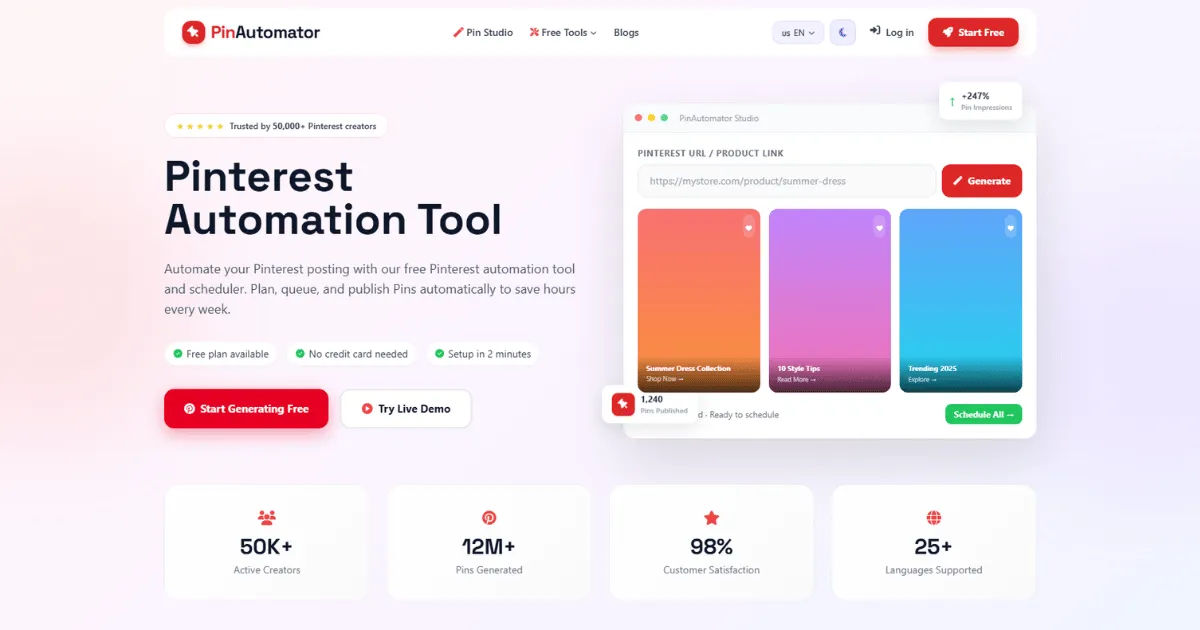
For bloggers, online stores, content creators, affiliate marketers, and businesses, managing multiple boards is often an important part of Pinterest marketing. Each board may target a different topic, audience, product category, or keyword. Without an organized system, keeping track of what to publish and where to publish it can take a significant amount of time.
The good news is that many scheduling tools are designed to support multiple boards. However, the exact features available can vary depending on the scheduling platform, Pinterest account type, and subscription plan. Some tools allow users to select different boards for individual pins, while others provide advanced features for organizing content across an entire Pinterest account.
Understanding how multiple-board scheduling works can help you decide whether automation is suitable for your Pinterest strategy and how to use it effectively.
Pinterest Boards
Pinterest Scheduler are collections where users organize and save pins around specific themes. A board might focus on a broad subject such as home decoration, while another could focus on a more specific topic such as small bedroom ideas.
For businesses and content creators, boards provide a way to organize content based on user interests. A fashion website might have separate boards for casual outfits, formal clothing, seasonal fashion, and accessories. An online furniture store could create boards for living room furniture, bedroom design, office furniture, and home organization.
Managing these boards manually can become challenging as the account grows. You may need to remember which content belongs to which board, determine the best time to publish each pin, and make sure your content is distributed consistently.
A scheduling system helps simplify this process by allowing you to plan content ahead of time.
What Is a Pinterest Scheduler?
A Pinterest Scheduler is a tool or scheduling feature that allows users to prepare pins in advance and arrange when they should be published. Instead of manually creating and publishing every pin at the moment it needs to go live, you can organize your content ahead of time.
Scheduling can be useful for people who want to maintain a regular Pinterest presence. Pinterest users may discover content at different times, so consistent publishing can help businesses and creators keep their profiles active.
Depending on the platform, a scheduling tool may allow you to upload an image, write a title and description, add a destination URL, choose a board, and select a publishing date and time.
Some tools also provide additional features such as content queues, bulk scheduling, analytics, and workflow management.
Can a Pinterest Scheduler Manage Multiple Boards?
Yes, a Pinterest Scheduler can generally manage multiple boards, although the exact capabilities depend on the scheduling tool you choose.
Most modern scheduling platforms allow users to connect their Pinterest account and select the board where each scheduled pin should be published. This means you can create a content plan that includes multiple boards instead of managing everything from one location.
For example, imagine that a website publishes articles about travel, food, and lifestyle. The Pinterest account might have separate boards for travel guides, healthy recipes, weekend trips, and lifestyle tips.
With a suitable scheduler, the user can prepare content for all of these boards and organize it into a single publishing workflow.
This can save time because the marketer does not have to manually create each pin and remember to publish it at a specific time.
How Multiple-Board Scheduling Works
The process is usually straightforward. First, you connect your Pinterest account to the scheduling platform. Depending on the tool, you may need to authorize access through Pinterest.
Once the account is connected, the scheduler may display the boards available on the account.
You can then create or upload a pin. This usually involves adding the visual, title, description, and destination link.
The next step is choosing the board where you want the pin to appear. If you manage multiple boards, you can repeat this process for different pieces of content.
After selecting the board, you choose the publishing date and time. Some platforms may allow you to add the pin to a queue instead of choosing a specific time manually.
Once the schedule is confirmed, the system handles the publishing process according to the selected settings.
This approach makes it possible to organize content for several boards without constantly switching between different publishing tasks.
Scheduling Content for Different Boards
One of the biggest advantages of using a Pinterest Scheduler is the ability to create separate content plans for different boards.
Each board may serve a unique purpose. Therefore, it is often better to organize your content according to the topic and audience of each board.
For example, a digital marketing company might manage boards about SEO, content marketing, social media, and email marketing.
The company could create a weekly schedule where several pins are assigned to the SEO board, while other pins are distributed among the remaining boards.
This creates a more organized publishing strategy.
Instead of randomly posting content, the business can decide in advance which topics deserve more attention and how frequently each board should receive new content.
Why Managing Multiple Boards Matters
Pinterest users often search for specific ideas rather than following accounts in the same way they might on traditional social networks.
This makes board organization particularly important.
A well-organized account can make it easier for users to discover content that matches their interests. If a business places every pin into one general board, visitors may find the account difficult to navigate.
Multiple boards allow content to be grouped into logical categories.
For example, a home improvement website could have boards dedicated to kitchen remodeling, bathroom design, living room ideas, outdoor spaces, and DIY projects.
Each board can target a different group of search terms and user interests.
A Pinterest Scheduler can support this structure by helping the business publish content consistently across all relevant boards.
Benefits of Using a Scheduler for Multiple Boards
Using a Pinterest Scheduler to manage several boards can provide several practical benefits.
The first is time savings.
Instead of manually publishing content every day, you can prepare multiple pins at once and schedule them in advance. This reduces the amount of repetitive work involved in Pinterest marketing.
Another benefit is consistency.
If you manage several boards manually, it is easy to forget one board for several weeks while focusing on another. Scheduling tools can help distribute content more evenly.
A scheduler can also make planning easier. You can create a content calendar that shows what is scheduled and where it will be published.
This makes it easier to identify gaps in your publishing strategy.
Saving Time Through Batch Scheduling
Batch scheduling is especially useful when managing multiple boards.
Instead of creating one pin every day, you can dedicate a specific block of time to Pinterest content.
For example, you might spend two hours on Monday preparing content for the entire week.
During that session, you can create pins for different articles, products, or landing pages. Then, you can assign each pin to the appropriate board and schedule the publishing times.
Once the schedule is complete, the system handles the planned publishing tasks.
This allows you to spend more time on content creation, customer service, SEO, product development, or other important responsibilities.
Maintaining a Consistent Publishing Schedule
Consistency is an important part of maintaining an active Pinterest account.
However, consistency does not necessarily mean publishing a large number of pins every day. It means developing a realistic publishing routine that you can maintain over time.
A Pinterest Scheduler can help you maintain that routine.
If you manage five boards, you can create a schedule that gives each board regular attention.
For example, one board might receive new content on Monday and Thursday, while another receives content on Tuesday and Saturday.
The exact schedule should depend on your content availability and marketing goals.
The important point is that scheduling makes the process easier to organize.
Organizing Boards by Topic
One effective approach is to organize your Pinterest boards according to content categories.
Suppose you operate a health and wellness website. You might have boards dedicated to healthy recipes, fitness tips, mental wellness, healthy lifestyle habits, and meal planning.
Each category has a different purpose.
When using a Pinterest Scheduler, you can create separate scheduling groups for these topics.
This makes it easier to ensure that your content is distributed across the account rather than being concentrated on one board.
Topic-based organization can also make your content planning more structured.
Managing Product Boards
Ecommerce businesses can benefit significantly from multiple-board scheduling.
An online clothing store might have boards for women's fashion, men's fashion, seasonal outfits, accessories, and special occasions.
A furniture business might have boards for sofas, dining rooms, bedrooms, offices, and outdoor furniture.
A scheduling tool can help organize product pins across these different categories.
For example, a furniture store can prepare product images and assign each one to the most relevant board.
This creates a structured publishing process and helps the business maintain an active presence across different product categories.
Using Multiple Boards Without Creating Duplicate Content
Managing multiple boards does not mean every pin should be published everywhere.
This is an important consideration.
If the same content is repeatedly posted to every board without a clear strategy, the account may become repetitive.
Instead, businesses should consider whether a pin genuinely fits the topic of each board.
For example, a blog post about small apartment storage might be relevant to boards about small spaces, organization, apartment living, and home improvement.
The same article may be suitable for several boards, but the presentation can be adapted to fit each audience.
Different visual designs, titles, descriptions, and angles can help make the content more relevant.
Creating Different Pins for the Same URL
One effective Pinterest strategy is to create multiple pin designs that lead to the same webpage.
For example, a blog post about kitchen remodeling could have several different pin designs.
One pin might highlight budget-friendly kitchen ideas.
Another might focus on modern kitchen trends.
A third could promote small kitchen storage solutions.
All three pins may lead to the same article, but each one approaches the topic differently.
When managing multiple boards, these variations can help you create more relevant content for different audiences.
A Pinterest Scheduler can make it easier to plan these variations and distribute them over time.
Choosing the Right Board for Each Pin
Selecting the right board is one of the most important parts of managing multiple boards.
A pin should be placed where users are most likely to find it relevant.
For example, a pin about wedding photography should not be placed on a general photography board if you have a dedicated wedding photography board.
Similarly, a recipe for vegetarian pasta may perform better on a vegetarian recipe board than on a general food board.
When scheduling content, always consider the relationship between the pin and the board.
The goal should be relevance rather than simply increasing the number of boards receiving the same content.
Scheduling Different Content Types
A Pinterest account may contain several types of content.
These could include blog posts, product pages, videos, tutorials, infographics, guides, and seasonal content.
Managing these content types across multiple boards can be easier with a scheduler.
For example, a food blogger might schedule recipes on a recipe board, cooking tutorials on a video board, and meal-planning guides on a meal-preparation board.
This approach creates a more balanced content mix.
Instead of publishing the same type of content repeatedly, you can plan different formats throughout the week.
Managing Seasonal Boards
Seasonal content requires careful timing.
A Christmas-related pin published in January is unlikely to have the same impact as one published several weeks before the holiday season.
The same applies to Valentine's Day, Halloween, back-to-school shopping, summer travel, and other seasonal events.
A Pinterest Scheduler can help you prepare seasonal content in advance.
You can create pins several weeks or months before the relevant season and schedule them according to your content calendar.
This reduces the risk of forgetting important seasonal opportunities.
It also gives you more time to create high-quality visuals and descriptions.
Managing Multiple Boards for a Blog
Bloggers often manage multiple boards because their websites cover several related subjects.
For example, a lifestyle blogger might write about fashion, travel, food, home decoration, and personal development.
Each category can have its own Pinterest board.
A scheduler can help the blogger maintain a consistent publishing routine across these categories.
Instead of spending time every day deciding what to post, the blogger can prepare content in advance.
This makes Pinterest marketing more manageable, especially for individuals who are also responsible for writing articles and maintaining their websites.
Managing Multiple Boards for Ecommerce
Ecommerce websites can have hundreds or thousands of products.
Managing Pinterest content for such a large inventory manually can be extremely time-consuming.
A scheduling system can help organize product promotion across multiple boards.
For example, a fashion retailer could have separate boards for seasonal collections, clothing categories, accessories, and style inspiration.
The business can create a content calendar that gives different product categories regular exposure.
However, automation should not replace strategy.
Businesses should still review product availability, pricing, seasonal relevance, and landing pages before scheduling content.
Creating a Content Calendar
A content calendar is one of the most useful tools for managing multiple boards.
It allows you to see your Pinterest strategy from a broader perspective.
You can plan content according to weeks or months and assign each piece to a specific board.
For example, a monthly calendar might include educational content, product promotions, seasonal posts, and blog articles.
You can then distribute these pins across your boards.
This approach helps prevent over-publishing on one board while neglecting others.
It also makes it easier to identify upcoming seasonal campaigns.
Using Analytics to Improve Board Management
Scheduling content is only one part of Pinterest marketing.
You should also review performance data to understand what is working.
Analytics can help you identify which boards receive the most impressions, saves, clicks, and engagement.
If one board consistently performs well, you may decide to create more content around that topic.
If another board receives very little attention, you can review its content strategy.
The goal is not simply to publish more pins.
The goal is to understand which types of content are helping you achieve your marketing objectives.
A Pinterest Scheduler with analytics features can make this process more convenient, although you can also review performance through Pinterest's own analytics tools.
Avoiding Over-Scheduling
Automation can save time, but too much automation can create problems.
If you schedule a large number of pins without reviewing them, your account may become repetitive or disconnected from current trends.
For this reason, it is important to maintain human oversight.
Before content is published, review the visual, title, description, link, and selected board.
Make sure everything is accurate and relevant.
A scheduler should support your strategy rather than replace your judgment.
Following Pinterest Guidelines
Anyone using scheduling tools should follow Pinterest's current policies and best practices.
Automated publishing should not be treated as a way to avoid platform rules.
Content should be original, useful, and relevant to users.
Links should lead to appropriate landing pages, and misleading descriptions should be avoided.
It is also important to review the terms and features of the specific scheduling platform you use.
Pinterest policies and third-party tool capabilities can change over time.
Responsible scheduling helps protect the quality of your account.
How Many Boards Should You Manage?
There is no universal number of boards that every Pinterest account should have.
The right number depends on your content, industry, and audience.
Creating too many boards can make an account difficult to manage.
If you only have a small amount of content, dozens of boards may not be practical.
On the other hand, a large ecommerce business may need many boards to organize different product categories.
The best approach is to create boards that have a clear purpose.
Every board should support your overall content strategy.
Should Every Board Receive the Same Number of Pins?
Not necessarily.
Some boards may be more important to your business than others.
For example, an online store may prioritize boards related to its best-selling products.
A blogger may focus more heavily on topics that generate the most website traffic.
Your scheduling strategy should reflect these priorities.
A Pinterest Scheduler allows you to distribute content according to your goals rather than following a strict one-size-fits-all schedule.
Some boards may receive frequent updates, while others may be updated less often.
How to Build an Effective Multi-Board Strategy
A successful strategy begins with clear organization.
Start by identifying your main content categories.
Then create boards that match those categories.
Next, determine which boards are most important to your business.
Create content specifically for each board whenever possible.
After that, prepare a realistic publishing schedule.
Use your scheduler to organize content in advance.
Finally, monitor performance and adjust your strategy.
This process creates a cycle of planning, publishing, measuring, and improving.
Common Mistakes When Scheduling Multiple Boards
One common mistake is publishing irrelevant content to boards simply to increase distribution.
Relevance should always come first.
Another mistake is using the same pin design repeatedly.
Even if the destination URL is valuable, users may become less interested if they repeatedly see identical visuals.
Another problem is ignoring underperforming boards.
If a board receives little engagement, it may need better content, improved keywords, or a clearer topic.
Finally, some users schedule content and never review their results.
Without analytics, it is difficult to know whether your strategy is actually producing meaningful outcomes.
Is a Pinterest Scheduler Suitable for Beginners?
Yes, scheduling tools can be useful for beginners.
In fact, beginners may find scheduling especially helpful because it provides structure.
Instead of trying to manage Pinterest randomly, new users can create a simple content calendar and schedule a manageable number of pins.
The key is to start small.
You do not need to create dozens of boards immediately.
Begin with a few relevant boards and focus on producing useful content.
As your account grows, you can expand your strategy.
Is a Pinterest Scheduler Worth Using?
For many businesses and creators, a scheduler can be worth using because of the time it saves.
The value is particularly clear when you manage multiple boards or publish content frequently.
However, the tool itself will not guarantee success.
A scheduler cannot automatically create a strong Pinterest strategy.
You still need quality content, attractive visuals, relevant keywords, useful landing pages, and consistent measurement.
The scheduler simply makes the publishing process more efficient.
Its real value comes from combining automation with thoughtful marketing decisions.
How to Choose a Pinterest Scheduler for Multiple Boards
When choosing a scheduling platform, consider how well it supports your specific needs.
First, check whether it can connect to your Pinterest account properly.
Then review how it handles multiple boards.
Look for features that allow you to select boards easily and organize scheduled content.
Bulk scheduling can be useful if you regularly prepare large amounts of content.
A visual calendar can help you understand your publishing schedule.
Analytics may also be valuable if you want to measure performance from the same platform.
Finally, consider pricing and ease of use.
The best tool is not necessarily the one with the most features. It is the one that fits your workflow and makes your Pinterest marketing easier to manage.
A Practical Example of Multi-Board Scheduling
Imagine an online home decor store with six Pinterest boards.
The boards focus on living rooms, bedrooms, kitchens, bathrooms, home offices, and organization.
The business publishes ten new products every month.
Instead of manually publishing each product pin, the marketing team creates several visual variations for the most important products.
The team then assigns each pin to the most relevant board.
A content calendar is created for the next four weeks.
Pins are scheduled throughout the month so that each board receives regular activity.
The marketing team then reviews analytics at the end of the month.
They discover that bedroom inspiration pins generate more clicks than general product pins.
Based on this information, they create more bedroom-focused content for the next month.
This example shows how scheduling and analytics can work together.
The scheduler handles the publishing workflow, while the marketing team remains responsible for strategy and decision-making.
The Role of Human Oversight
Even with automation, human involvement remains important.
A scheduling tool can publish content, but it cannot always understand your brand's changing priorities.
For example, a product might go out of stock after you schedule a pin.
A seasonal campaign might need to be changed because of a business decision.
A blog article might be updated and require a new description.
Regularly reviewing your scheduled content helps prevent these issues.
The best approach is to automate repetitive tasks while keeping humans involved in strategy and quality control.
Can One Scheduler Handle All Your Boards?
In many cases, yes.
A suitable Pinterest Scheduler can allow you to manage multiple boards from a single account or dashboard.
However, you should always check the specific tool's limitations before choosing it.
Some platforms may restrict the number of accounts, boards, scheduled posts, or features available on lower-priced plans.
Others may provide advanced scheduling options only to premium subscribers.
Therefore, it is important to compare features based on your actual requirements.
If you have a small account with three boards, you may not need advanced enterprise-level features.
If you manage multiple brands or large ecommerce accounts, you may require more powerful organization and reporting tools.
Conclusion
A Pinterest Scheduler can be an effective solution for managing multiple boards, especially when your Pinterest account contains a large amount of content or serves several different topics. Instead of manually publishing every pin, you can prepare content in advance, select the appropriate boards, and organize your publishing schedule around your marketing goals.
The biggest advantage is efficiency. Managing multiple boards manually can quickly become repetitive, particularly for bloggers, ecommerce businesses, agencies, and content creators. A scheduling system reduces this workload by allowing you to organize content ahead of time and maintain a consistent publishing routine.
However, successful multi-board management requires more than simply scheduling as many pins as possible. Every board should have a clear purpose, and every pin should be relevant to the audience that follows or discovers that board. Content should be organized carefully so that users can easily understand what each board offers.
A good strategy also involves creating different content for different audiences. Rather than publishing identical pins everywhere, consider developing unique visual designs, titles, descriptions, and content angles. This can make your Pinterest presence more useful and engaging while helping you reach people with different interests.
A Pinterest Scheduler can also make batch scheduling much easier. You can prepare content for an entire week or month in one focused session and then allow your schedule to handle the routine publishing work. This can free up valuable time for creating better content, improving your website, managing customers, or developing new products.
For ecommerce businesses, the ability to manage multiple boards can be particularly valuable. Different product categories can be organized into separate boards, allowing businesses to promote their products in a structured way. Bloggers can also use multiple boards to separate different content categories and distribute articles according to their topics.
At the same time, automation should always be combined with human oversight. Scheduling tools are excellent for handling repetitive publishing tasks, but they cannot replace strategic thinking. You should regularly check your scheduled content, review links, monitor product availability, and make adjustments when your business priorities change.
Analytics should also play an important role in your strategy. Not every board will perform equally well, and not every type of content will generate the same results. By studying impressions, saves, clicks, and other available performance data, you can identify which topics deserve more attention.
The number of boards you manage should also be based on your actual content and business needs. More boards are not automatically better. A smaller number of well-organized boards with useful, relevant content may be more effective than a large collection of inactive or poorly defined boards.
Ultimately, the answer to whether a Pinterest Scheduler can manage multiple boards is yes, but the quality of the results depends on how you use it. The tool can simplify scheduling, improve organization, and reduce repetitive work, but your content strategy remains the foundation of success.
When used properly, a Pinterest Scheduler becomes more than a simple publishing tool. It can become part of a larger content management system that helps you organize multiple boards, maintain consistency, plan seasonal campaigns, distribute content efficiently, and learn from performance data.
For anyone managing a growing Pinterest account, the combination of thoughtful board organization, high-quality content, strategic scheduling, and regular performance analysis can create a more sustainable marketing workflow. The goal is not to automate everything. The goal is to automate the repetitive parts of Pinterest management while keeping the important creative and strategic decisions in human hands.

.jfif)