Where should numbers go on a custom soccer uniform?
Choosing the right number placement is an important part of designing a custom soccer uniform. Numbers are not simply decorative elements. They help referees, teammates, coaches, and spectators identify players quickly during a match. A well-placed number should be easy to see from different angles while also fitting naturally into the overall design of the jersey, shorts, and other team apparel.
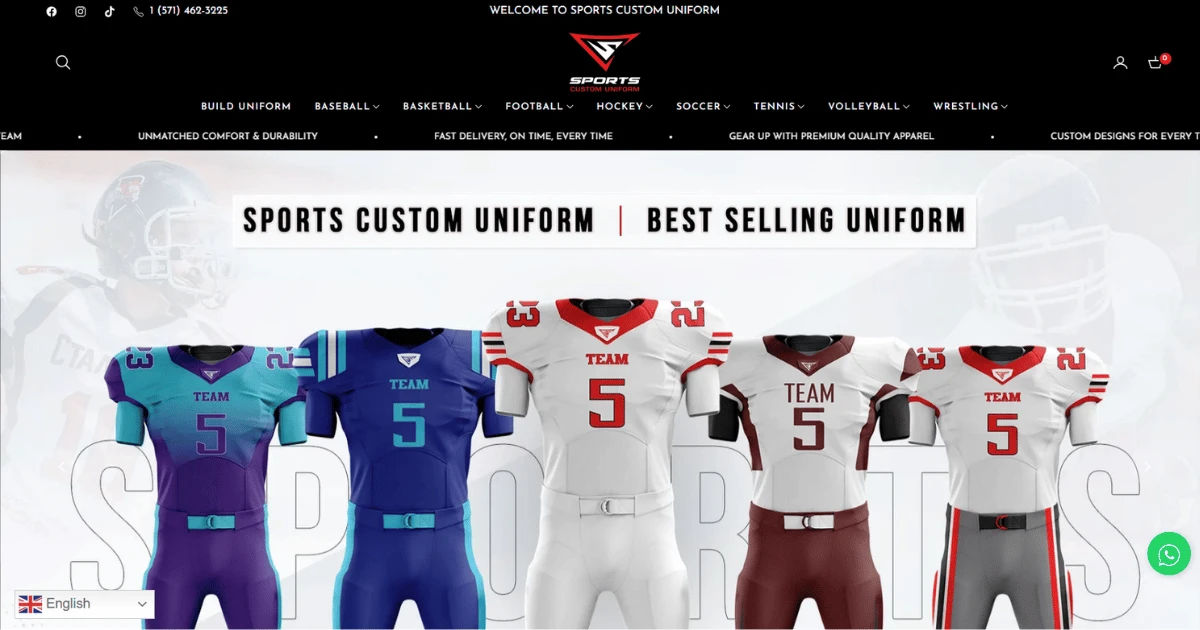
For most soccer teams, the back of the jersey is the primary location for the player's number. However, numbers can also appear on the front of the jersey and on the shorts. The exact placement depends on league rules, team preferences, uniform design, and the size and style of the numbers.
When creating a custom soccer uniform, it is important to think about number placement before the final design is printed or embroidered. A number that is too small, too low, too close to a seam, or difficult to distinguish from the background can create problems during games. Proper positioning ensures that the uniform looks professional while remaining functional.
Why Number Placement Matters
Soccer is a fast-moving sport. Players can move from one side of the field to another within seconds, and spectators may need to identify a player from a considerable distance.
Clear numbers make this easier.
A properly positioned number also gives a team a more organized and professional appearance. Even a creative jersey design can look unfinished if the numbers are placed inconsistently.
Uniform numbers also have a practical purpose. Coaches may use them when giving instructions, referees rely on player identification, and team officials may use them for match records and substitutions.
For these reasons, number placement should be treated as part of the overall uniform design rather than as an afterthought.
Where Should the Main Number Go?
The Back of the Jersey
The back of the jersey is the most important location for a player's number. In many soccer competitions, the player's primary number is placed in the center of the back.
The number should be positioned below the player's name if the uniform includes names. If names are not included, the number is generally centered in the upper or middle section of the back.
The number should have enough space around it to remain easy to read. It should not overlap seams, decorative graphics, sponsor logos, or other design elements.
A centered back number is also easier to recognize when a player is running away from the viewer, which happens frequently during a soccer match.
Number Size on the Back
The number should be large enough to be visible from the sidelines and from a distance. Exact size requirements can vary by league or competition, so teams should check their applicable regulations before finalizing the design.
As a general design principle, larger numbers work better on the back because they provide stronger visual recognition.
The font also matters. A complicated or overly decorative typeface can make a number difficult to identify. Simple, bold, athletic fonts are usually a safer choice.
Should There Be a Number on the Front?
Many soccer uniforms also feature a smaller number on the front of the jersey. The front number is usually placed on the chest area, often toward the center or on one side of the chest.
A front number can help identify a player when they are facing spectators, referees, or cameras.
However, the exact position may depend on the jersey design. If the shirt has a large team crest, sponsor logo, or other graphics across the chest, the number may need to be moved slightly to create enough visual separation.
When designing a custom soccer uniform, the front number should complement the back number without competing with important team branding.
Center Chest Placement
A centered number can create a balanced and traditional appearance.
This placement works particularly well when the jersey has minimal graphics and the team wants a clean, symmetrical design.
The disadvantage is that a centered front number may compete with a large team crest or sponsor logo. Designers should check the entire chest area before deciding on this position.
Right or Left Chest Placement
A smaller number can also be placed on one side of the chest.
This is useful when the opposite side contains a team crest. For example, a club may place its crest on the left chest and the player's number on the right.
This arrangement creates visual balance while giving each element its own space.
Where Should the Number Go on the Shorts?
Player numbers are sometimes placed on the front of the soccer shorts. The exact position can vary depending on league requirements and the uniform's design.
A common approach is to place the number on one leg, usually toward the front or outer portion of the shorts.
The number should remain visible when the player is standing, running, or moving across the field.
It is important to avoid placing the number directly over areas that stretch significantly during movement. Excessive stretching can distort the appearance of the number.
For a custom soccer uniform, matching the shorts number with the jersey numbers can create a cohesive appearance. The shorts number is normally smaller than the primary back number because the available space is more limited.
What About Goalkeeper Uniforms?
Goalkeepers usually have their own uniform design to distinguish them from field players and referees.
The goalkeeper's number should still follow the applicable competition rules. The back is generally the primary location, while a smaller number may appear on the front and shorts depending on the uniform requirements.
Because goalkeeper jerseys often feature long sleeves and additional graphics, designers should pay attention to sleeve construction, padding, and seams.
The number should remain clearly visible even when the goalkeeper is wearing gloves and moving around the goal area.
Choosing the Right Number Color
Placement is only one part of creating an easy-to-read uniform. Contrast is equally important.
A dark number on a dark jersey can become difficult to see. Similarly, a light number on a very pale background may not provide enough contrast.
For example, a dark blue jersey might work well with white numbers, while a white jersey can accommodate darker numbers.
Patterns require additional consideration. If the jersey contains stripes, gradients, or complex graphics, the number may need an outline or contrasting border.
The goal is simple: the number should stand out immediately.
Using an Outline
An outline can make numbers more visible when the jersey has a busy background.
For example, a white number with a dark outline can remain readable over a multicolored design.
However, outlines should not make the number look crowded. The border should support readability rather than distract from the number itself.
Number Placement and Player Names
If player names are printed above the numbers, spacing becomes especially important.
The name should not be so close to the number that the two elements appear to merge. At the same time, excessive space can make the back look disconnected.
A balanced arrangement typically places the name above the main number with enough separation for both elements to remain clear.
The name and number should also use complementary fonts. A highly decorative name combined with a complex number can reduce readability.
For professional-looking custom soccer uniform designs, consistency between typography, spacing, and number sizing is essential.
Consider League and Tournament Rules
Before ordering uniforms, teams should review the rules of the league or tournament in which they compete.
Different organizations can have different requirements for:
-
Number size
-
Number placement
-
Number color
-
Front and back numbers
-
Player-name placement
-
Sponsor positioning
-
Number visibility
-
Font styles
A design that looks excellent may still need changes if it does not meet competition regulations.
This is particularly important for school teams, competitive clubs, college programs, and tournament teams.
Common Number Placement Mistakes
Putting the Number Too Low
A number placed too low on the back may become partially hidden when the player tucks in the jersey.
It can also interfere with shorts, waistbands, or other equipment.
Keeping the number within the central back area generally provides better visibility.
Making the Number Too Small
Small numbers may look elegant in a design preview but become difficult to identify during an actual match.
Remember that uniforms are viewed from a distance. A number that is readable on a computer screen may not be readable from the other side of a soccer field.
Using Low Contrast
A beautiful color combination is not necessarily a practical one.
If the number blends into the jersey, players become harder to identify. Contrast should always take priority over purely decorative choices.
Placing Numbers Over Seams
Seams can interrupt printed or applied numbers.
When designing a custom soccer uniform, the number should be positioned on a relatively smooth area of fabric whenever possible.
Changing Placement Between Players
Every player on the same team should have the number positioned consistently.
If one player's number sits high while another player's number sits several inches lower, the uniform set can look unprofessional.
Consistency creates a stronger team identity.
How Design Elements Affect Number Placement
Modern soccer jerseys can include stripes, geometric shapes, gradients, sponsor logos, club crests, and other artwork.
These elements should be planned together rather than separately.
For example, a vertical stripe running through the center of the back may interfere with the number. A designer might need to adjust the stripe or place the number on a contrasting panel.
Likewise, a large sponsor logo should not compete with the player's identification number.
The best custom soccer uniform designs create a clear visual hierarchy. The player's number should remain one of the most noticeable elements while still allowing the team identity and sponsorship to be visible.
Material and Printing Considerations
The type of fabric can influence how a number looks and performs.
Soccer jerseys are commonly made from lightweight synthetic materials designed to handle sweat and movement. Some printing methods work better on particular fabrics than others.
Heat-applied numbers, screen printing, sublimation, and other techniques can produce different visual results.
Sublimation, for example, allows designs to become part of the fabric rather than adding a separate layer on top. This can be useful for highly detailed uniforms.
Regardless of the method, the number should remain durable after repeated washing and match use.
Number Placement for Youth Teams
Youth soccer uniforms require special consideration because players may grow quickly and uniforms can have smaller dimensions.
A number should still be large enough to identify the player easily.
Avoid placing large numbers so close to collars, seams, or waistbands that they become distorted when the jersey is worn.
For younger players, simple fonts and strong contrast are particularly helpful.
A straightforward design can also make uniforms easier for coaches, parents, referees, and spectators to identify.
Designing for Different Jersey Styles
Not every soccer jersey has the same construction.
Some feature V-necks, round collars, button-style collars, raglan sleeves, or large graphic panels.
These differences can affect the available space.
For example, a large graphic near the upper back may require the number to be positioned slightly lower. However, the number should still remain high enough to avoid interference with the waistband.
Before producing a custom soccer uniform, teams should request a visual mockup showing the front, back, and shorts.
A mockup makes it much easier to identify potential placement problems before production begins.
A Practical Placement Checklist
Before approving the final uniform design, review the following points:
-
Is the primary number centered on the back?
-
Is the number large enough to read from a distance?
-
Is there enough space around the number?
-
Is the number separated from the player's name?
-
Does the front number follow league requirements?
-
Is the shorts number positioned consistently?
-
Does the number have sufficient contrast?
-
Is the number clear against patterns and graphics?
-
Is it away from major seams?
-
Does every player's number use the same placement?
-
Does the design comply with league or tournament rules?
-
Has the final design been reviewed from multiple viewing angles?
This simple review can prevent expensive mistakes.
Balancing Style and Function
A soccer uniform should look exciting, but appearance should never reduce functionality.
Teams sometimes focus heavily on colors, logos, patterns, and typography while treating the number as a minor design detail.
That approach can lead to poor visibility.
A better strategy is to design the number into the uniform from the beginning.
Start by deciding where the main number will go. Then position the team crest, sponsor logos, player name, patterns, and other elements around it.
This creates a more organized design.
For a custom soccer uniform, functionality and style can work together. A well-designed number can become part of the team's visual identity rather than simply being an identification label.
What Makes Number Placement Professional?
Professional-looking uniforms usually share several characteristics.
First, the numbers are consistent. Every player has the same basic placement and sizing.
Second, the numbers are highly readable.
Third, the typography fits the team's identity.
Fourth, the number does not compete with important branding.
Finally, the design follows competition rules.
These principles apply whether a team is creating uniforms for a local recreational league or a competitive club.
Conclusion
The best place for the primary player number is generally the center of the back of the soccer jersey. This position provides strong visibility and allows players to be identified while they are moving away from spectators or officials.
A smaller number can also be placed on the front of the jersey, usually on the chest, and another number may be included on the shorts when required or desired. The exact locations should always be checked against the rules of the relevant league or tournament.
When planning a custom soccer uniform, teams should consider more than just where the number looks attractive in a design preview. Visibility, contrast, spacing, fabric, seams, player movement, and competition requirements all matter.
The number should be large enough to read, positioned consistently, and separated from logos and other graphics. A strong contrast between the number and the jersey background is also essential.
Most importantly, number placement should be decided early in the design process. Moving a number after other elements have been finalized can create unnecessary conflicts with names, logos, sponsors, stripes, or patterns.
A successful uniform combines identity and practicality. The colors and graphics show what the team represents, while the number makes each player easy to recognize. By planning these elements together, teams can create a clean, durable, and professional-looking custom soccer uniform that performs well both on and off the field.