How does small batch clothing manufacturer manage runs?
Small batch clothing production looks simple from the outside, but managing a small run requires careful planning at almost every stage. A factory has to balance fabric purchasing, pattern development, cutting, sewing, quality control, packaging, and delivery without the economies of scale that come with large orders. 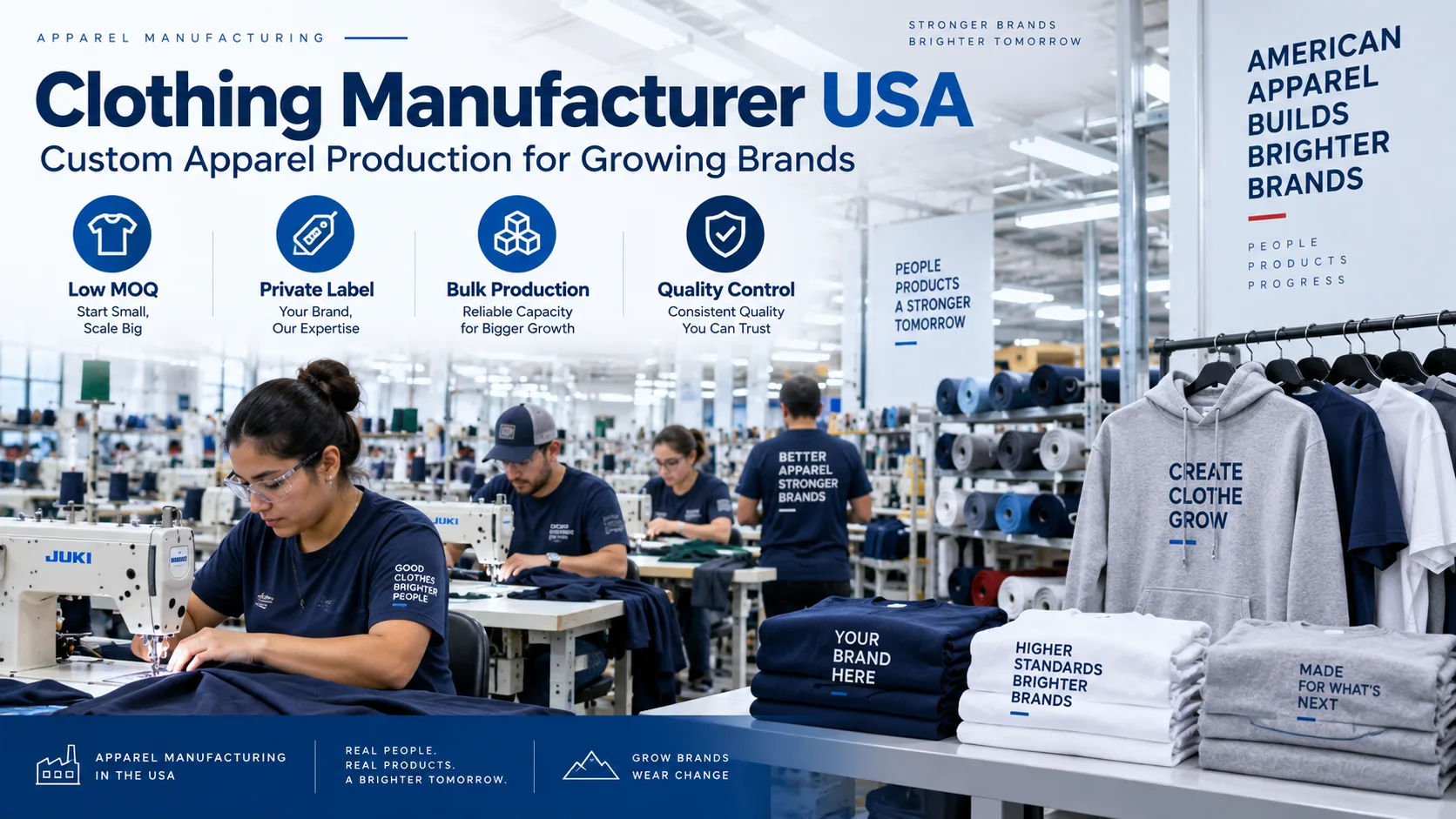
The biggest difference between small and large production runs is not simply the number of garments being made. It is how the manufacturer organizes resources. A large factory may process thousands of identical garments through a highly standardized production line, while a small run often requires more flexible scheduling and closer supervision.
For emerging fashion brands, this flexibility can be extremely valuable. It allows them to test customer demand, make changes between collections, and reduce the financial risk of producing too much stock. However, small runs still need professional production management to remain profitable and consistent.
What Is a Small Batch Clothing Run?
A small batch clothing run is a production order involving a relatively limited number of garments. There is no universal quantity that officially defines a small batch because production capacity varies between manufacturers.
One factory may consider 50 pieces a small order, while another may comfortably produce several hundred pieces and still describe the job as small batch production.
The important point is that the manufacturer is producing a controlled quantity rather than committing to a large-scale production run.
Small batches are commonly used for:
-
New fashion brands
-
Limited-edition collections
-
Product testing
-
Seasonal designs
-
Influencer collections
-
Custom clothing
-
Boutique businesses
-
Pre-order campaigns
-
New color or size variations
A low MOQ clothing manufacturer is particularly useful for businesses that do not yet know how customers will respond to a new product.
Instead of investing heavily in thousands of garments, a brand can produce a smaller quantity, sell the collection, study customer feedback, and decide whether another production run makes sense.
How Manufacturers Plan Small Production Runs
The first stage is production planning.
Before fabric is cut, the manufacturer needs to understand exactly what the client wants. This normally includes the garment design, measurements, fabric, colors, trims, labels, printing or embroidery requirements, packaging instructions, and quantity.
For example, producing 100 hoodies in one color is relatively straightforward. Producing 100 hoodies divided across five colors, six sizes, and different artwork placements requires much more planning.
The manufacturer creates a production plan that determines how materials and labor will be allocated.
This helps prevent problems such as fabric shortages, missing trims, incorrect labels, or excessive machine downtime.
Small orders can actually require more attention per garment because there is less room to absorb mistakes.
Managing Fabric Quantities
Fabric purchasing is one of the most important parts of small batch production.
Large clothing manufacturers can purchase huge rolls of fabric and negotiate better prices because of their purchasing volume. Small runs do not always have this advantage.
A manufacturer must calculate the approximate fabric requirement based on:
-
Garment measurements
-
Fabric width
-
Size range
-
Number of garments
-
Pattern layout
-
Cutting efficiency
-
Expected production waste
The cutting team also needs to consider shrinkage.
Some fabrics shrink during washing or finishing, so manufacturers may need to account for this before cutting the final pieces.
A professional low MOQ clothing manufacturer will normally discuss fabric availability with the client before production begins. This is important because certain fabrics may only be available above a particular minimum quantity.
Managing Different Sizes
Size management becomes surprisingly important in small runs.
Imagine a brand orders 120 T-shirts. The manufacturer cannot simply produce 120 identical garments if the brand needs multiple sizes.
The order may be divided into XS, S, M, L, XL, and XXL.
The factory must prepare the correct cutting quantities for each size and ensure that the right pieces are matched during sewing.
A production mistake involving size distribution can create a serious problem for a small brand.
For example, receiving too many large sizes and too few medium sizes could leave the business with unwanted inventory even if the total production quantity is correct.
Good manufacturers therefore confirm the size breakdown before cutting begins.
Pattern Making and Grading
Patterns are another important part of managing small runs.
The pattern determines the shape and measurements of each garment component. Once the basic pattern is approved, it may need to be graded into different sizes.
For a small production order, the manufacturer still needs to create accurate patterns even though the quantity is limited.
This is where professional experience matters.
A factory cannot simply assume that producing fewer garments means less technical work. Pattern development, grading, and sample approval can take nearly the same amount of attention regardless of the final production quantity.
The cost of these development stages may therefore represent a larger percentage of the total cost in a small order.
Sample Approval Before Production
Most professional manufacturers prefer to produce a sample before starting the complete run.
The sample allows the brand to inspect the garment physically rather than relying only on digital drawings or measurements.
The client may check:
-
Fit
-
Fabric feel
-
Stitching
-
Color
-
Measurements
-
Print placement
-
Embroidery
-
Label positioning
-
Overall appearance
If something is wrong, changes can be made before bulk production.
This stage is especially important when working with a low MOQ clothing manufacturer because a small production run may have a narrow profit margin. Catching an error after production is finished can be expensive.
How Cutting Is Managed
Once the sample is approved, the manufacturer prepares the cutting process.
Fabric is layered according to the production requirements. Patterns are then placed on the fabric to maximize material usage.
In large production, automated cutting systems may be used for efficiency. In smaller runs, manual or semi-automated cutting can sometimes make more financial sense.
The goal is to reduce fabric waste while maintaining accurate garment pieces.
Even a small cutting error can affect the entire run. If sleeves are cut incorrectly, for example, the factory may not have enough remaining fabric to replace them.
This is why experienced cutting staff are valuable in small batch production.
Managing Sewing Production
After cutting, the garment pieces move to the sewing stage.
The factory may organize workers according to different operations. One person may attach collars, another may sew side seams, and another may complete cuffs or hems.
For a very small order, manufacturers may use a flexible sewing team rather than dedicating a large production line to the job.
This flexibility helps the factory avoid unnecessary downtime.
Small runs are often scheduled between larger orders. A manufacturer has to decide when the order can enter production without disrupting existing commitments.
A low MOQ clothing manufacturer that regularly handles smaller orders will usually have systems designed around this type of flexible scheduling.
Why Small Runs Can Take Longer Than Expected
People sometimes assume that a smaller order automatically means a much faster delivery.
That is not always true.
A factory producing 50 garments still has to go through development, material sourcing, cutting, sewing, inspection, finishing, and packing.
Some processes take nearly the same amount of time whether the order contains 50 garments or 500.
Material sourcing can also create delays.
If a particular fabric or trim is not immediately available, the manufacturer may have to wait for the supplier before production can begin.
For this reason, brands should ask about the complete production timeline rather than calculating delivery time based only on the number of garments.
Quality Control During Small Runs
Quality control is especially important in small production because every defective garment represents a larger percentage of the total order.
Suppose a factory produces 1,000 garments and finds 10 defective pieces. That is a 1% defect rate.
If it produces only 100 garments and finds 10 defective pieces, the situation is obviously much more serious.
Manufacturers may inspect garments during several stages.
They can check fabric before cutting, inspect pieces during sewing, and perform final inspections after garments are completed.
Common quality checks include:
-
Measurements
-
Stitch strength
-
Seam construction
-
Fabric defects
-
Color consistency
-
Print quality
-
Embroidery quality
-
Zipper operation
-
Button placement
-
Label accuracy
A reliable low MOQ clothing manufacturer should have a clear quality-control process rather than checking garments only when everything is already packed.
Handling Color Variations
Color management can become complicated when a small order contains several colors.
Different fabric batches can sometimes have slight differences in shade.
This is particularly noticeable with garments that need to match exactly across multiple production batches.
Manufacturers may therefore approve a fabric swatch before purchasing or cutting the complete material.
For repeat orders, keeping records of the approved fabric color can make future production easier.
Brands should also understand that the appearance of colors can vary depending on lighting and screen settings. A digital color shown on a computer is not always identical to the physical fabric.
Managing Trims and Accessories
Garments often require more than fabric.
Depending on the design, the manufacturer may need:
-
Buttons
-
Zippers
-
Elastic
-
Drawcords
-
Labels
-
Hangtags
-
Rivets
-
Snaps
-
Patches
-
Packaging materials
Small orders can be challenging because suppliers may also have minimum order quantities for these components.
For example, a trim supplier might sell buttons in quantities much larger than the clothing brand actually needs.
The manufacturer may need to source leftover stock, negotiate with suppliers, or use standard components that are easier to obtain in smaller quantities.
This is another reason to discuss material options early when working with a low MOQ clothing manufacturer.
Managing Custom Printing and Embroidery
Printing and embroidery introduce additional production stages.
For screen printing, the manufacturer may need to prepare screens or artwork separations.
For embroidery, the design may need to be converted into a machine-readable embroidery file.
Small orders can make setup costs more noticeable because the same preparation work may be required even when only a limited number of garments are produced.
Some manufacturers therefore recommend simpler artwork or alternative decoration methods for very small runs.
This does not mean small brands cannot have high-quality branding. It simply means the decoration method should match the production quantity and budget.
How Manufacturers Keep Small Runs Profitable
A factory still needs to make money on small orders.
The lower quantity means the manufacturer cannot always spread fixed costs across hundreds or thousands of garments.
Manufacturers manage this by carefully controlling production time, materials, machine usage, and labor.
Some may charge higher per-unit prices for small orders.
This is normal.
A brand should not automatically assume that a low MOQ means the same unit price as a large wholesale order.
The advantage is that the business needs less money upfront and carries less inventory risk.
For a growing brand, paying a little more per garment can sometimes be worthwhile if it prevents thousands of dollars from being tied up in unsold stock.
Inventory Management After Production
Once garments are completed, the manufacturer may pack them according to the brand's instructions.
Packaging can be arranged by size, color, style, or individual customer order.
For e-commerce businesses, this can make fulfillment easier.
Some brands use small production runs alongside pre-orders. They collect customer orders first and then produce an appropriate quantity.
This approach can reduce excess inventory.
A low MOQ clothing manufacturer can support this model by allowing the brand to reorder relatively small quantities when demand becomes clearer.
Reordering Successful Designs
One of the biggest advantages of small batch production is the ability to test products.
Suppose a brand launches three jacket designs.
One becomes extremely popular, another performs moderately, and the third receives very little attention.
Instead of having thousands of every design sitting in storage, the business can focus its next production order on the successful product.
This makes small batch manufacturing useful as a market-testing strategy.
The manufacturer should keep production specifications on file so successful designs can be reproduced more efficiently.
These records may include patterns, measurements, fabric details, colors, trims, artwork, and packaging instructions.
Communication Between Brand and Manufacturer
Good communication can make or break a small production run.
The manufacturer should know exactly what the client expects before production starts.
Likewise, the brand should understand what the factory can realistically provide.
Useful production documents may include:
-
Tech packs
-
Size charts
-
Measurement specifications
-
Fabric information
-
Color references
-
Artwork files
-
Label designs
-
Packaging instructions
Clear documentation reduces misunderstandings.
A manufacturer that asks detailed questions before production is generally a better sign than one that immediately promises everything without reviewing the specifications.
Common Problems With Small Batch Production
Small runs are not completely risk-free.
One common issue is inconsistent sizing.
Another is fabric availability.
Brands may also experience higher per-unit costs than expected.
Other problems can include production delays, trim shortages, color differences, stitching defects, and packaging mistakes.
The best way to reduce these risks is to establish expectations before production.
A clear sample approval process is particularly useful.
It gives both parties a physical reference point for the finished product.
What Should Brands Ask a Manufacturer?
Before placing an order, brands should ask practical questions.
What is the minimum order quantity?
What is included in the quoted price?
Are sampling costs separate?
How long does sampling take?
What fabrics are available?
Can the manufacturer source custom materials?
How are quality problems handled?
What happens if the final quantity is short?
Can the factory support repeat orders?
Can labels and packaging be customized?
These questions help the brand understand the complete production process instead of focusing only on the unit price.
When comparing a low MOQ clothing manufacturer, brands should also consider communication, quality, reliability, and production experience.
The cheapest quote is not necessarily the cheapest option after delays, defects, and wasted materials are considered.
Small Batch Manufacturing and Growing Fashion Brands
Small batch manufacturing is particularly useful during the early stages of a fashion business.
A new brand rarely knows exactly which products will sell.
Customer preferences can change quickly, and social media trends can make certain styles popular for only a short period.
Small production gives brands room to experiment.
It also makes it easier to introduce new collections without committing excessive capital.
As demand grows, the brand can gradually increase production quantities.
This creates a natural path from product testing to larger-scale manufacturing.
Conclusion
Small batch clothing manufacturing is essentially a balancing exercise. The manufacturer has to provide consistent quality while working with smaller quantities, tighter material requirements, and less opportunity to spread fixed costs across a large production volume.
The process normally involves planning, material sourcing, pattern development, sampling, cutting, sewing, quality control, finishing, and packaging. Each stage matters, even when the order contains only a few dozen or a few hundred garments.
For new and growing fashion businesses, working with a low MOQ clothing manufacturer can be a practical way to reduce inventory risk while testing products in the real market. Instead of guessing how many garments customers will buy, brands can start smaller and use actual sales data to guide future production.
The key is choosing a manufacturer that understands small orders rather than simply accepting them. Experience with small runs can make a major difference because the factory needs to manage materials, labor, scheduling, quality control, and repeat production efficiently.
Small batch production does not mean cutting corners. In fact, successful small runs usually depend on careful attention to detail. When the manufacturer and brand communicate clearly, approve samples properly, manage specifications, and plan materials in advance, even a relatively small order can achieve professional results.
For a fashion startup, that flexibility can be more valuable than simply getting the lowest possible price. A smaller initial production run gives the brand an opportunity to learn, improve, and grow without taking an unnecessary inventory gamble.