
What are contract fabrics Dubai used for?
Contract fabrics Dubai are specially selected textiles designed for commercial, hospitality, healthcare, office, and other high-use environments. Unlike ordinary residential fabrics, they are generally chosen with durability, safety, maintenance, appearance, and performance in mind.
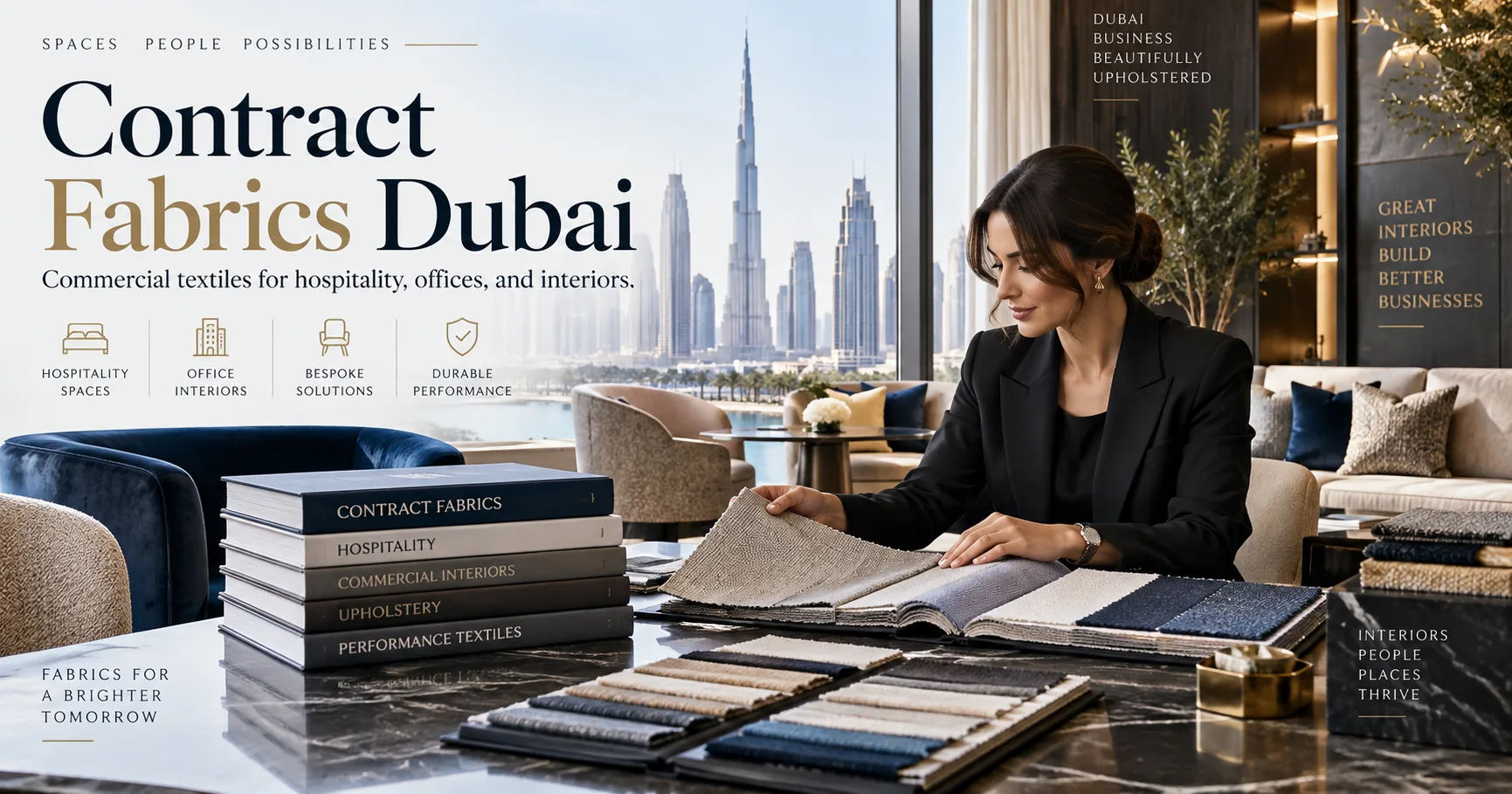
These fabrics are used in places where furniture and soft furnishings experience frequent daily use. Hotels, restaurants, offices, hospitals, schools, retail stores, and public buildings may all require fabrics that can maintain their appearance while handling regular wear.
The right fabric can also contribute to the overall atmosphere of a commercial space. It can add color, texture, comfort, and visual identity while meeting practical requirements. This makes contract textiles an important part of commercial interior design.
Contract Fabrics
Contract fabrics are textiles intended for professional or commercial applications. Their specifications can vary depending on where they will be installed and how they will be used.
For example, fabric used on a hotel lobby sofa may need strong abrasion resistance because hundreds of guests may sit on it regularly. Restaurant upholstery may need easy cleaning because food and drink spills are common.
Some projects also require fabrics with specific fire-safety properties. In these situations, designers and suppliers must consider the relevant building and project requirements before selecting a material.
How Are They Different From Residential Fabrics?
Residential fabrics are often selected primarily according to comfort, decoration, personal taste, and the amount of use expected in a home.
Commercial fabrics usually have additional performance requirements. They may need to withstand repeated cleaning, heavy traffic, friction, sunlight, or other environmental conditions.
This does not mean that contract fabrics cannot look attractive. Modern commercial textiles are available in many colors, patterns, textures, and finishes, allowing designers to combine functionality with a sophisticated appearance.
Hotel and Hospitality Interiors
Hotels are among the most common users of commercial-grade textiles. Every part of a hotel can have different fabric requirements.
Lobby seating, restaurant chairs, bedroom furniture, curtains, decorative cushions, and other upholstered elements may all use specialized textiles.
Hotel Lobby Furniture
Hotel lobbies receive continuous traffic throughout the day. Sofas, lounge chairs, benches, and reception seating can experience significant friction and repeated use.
Durable upholstery helps these furnishings maintain their appearance for longer. Designers can select textures and colors that complement the hotel's interior theme while also considering cleaning and maintenance requirements.
Hotel Rooms and Suites
Guest rooms require a balance between comfort and durability. Upholstered headboards, chairs, benches, curtains, and decorative elements can all incorporate commercial textiles.
The fabric should suit the hotel's design concept while being practical for housekeeping teams. Materials that can be maintained efficiently may help simplify regular room maintenance.
Restaurants and Cafés
Restaurants have particularly demanding textile requirements. Chairs, booths, banquettes, and other upholstered furniture are exposed to food, beverages, frequent cleaning, and constant use.
For this reason, restaurant fabrics are often selected for their durability and cleanability. Patterns and darker tones may also be considered where appropriate because they can help disguise minor marks between cleaning cycles.
Office Furniture and Workspaces
Modern offices use upholstered furniture in meeting rooms, reception areas, executive offices, breakout spaces, and employee lounges.
Commercial textiles can be used on office chairs, sofas, acoustic panels, partitions, and other interior elements.
Reception Areas
A reception area creates an immediate impression on visitors. Upholstered seating and decorative textile elements can make the space feel more welcoming.
Because reception furniture can receive frequent use, the selected fabric needs to match the expected traffic level. The appearance should also support the company's branding and interior design.
Meeting Rooms
Meeting rooms often contain upholstered chairs and other textile-covered furniture. Fabrics can introduce warmth into spaces that might otherwise feel overly formal.
Acoustic textiles can also be incorporated into walls, partitions, and panels where sound management is part of the interior design strategy.
Employee Lounges
Breakout and lounge areas are designed for comfort and informal interaction. Sofas, armchairs, cushions, and upholstered benches may use durable fabrics that can tolerate regular employee use.
Healthcare Facilities
Healthcare environments have unique requirements because cleanliness and maintenance are especially important.
Commercial textiles may be used for waiting-room chairs, visitor seating, privacy curtains, acoustic treatments, and selected upholstered furniture.
Fabric selection should consider the cleaning methods, disinfectants, moisture exposure, and performance standards required by the specific healthcare project.
Waiting Areas
Waiting rooms can experience constant traffic. Seating must therefore be comfortable while also being suitable for frequent cleaning and maintenance.
A well-selected textile can help create a calm environment without sacrificing practical performance.
Privacy Curtains
Textiles are also used for privacy curtains and similar applications in healthcare settings. These materials may require specific performance characteristics depending on the facility and application.
The exact requirements should always be confirmed with the manufacturer and project specifications.
Educational Buildings
Schools, colleges, training centers, and universities can also use commercial-grade textiles.
Classrooms, libraries, cafeterias, auditoriums, reception areas, and student lounges may contain upholstered furniture or textile-based interior products.
Educational facilities typically experience heavy daily use. Chairs and sofas may be moved, occupied, and cleaned frequently.
Durable textiles can therefore be useful for maintaining furniture in good condition while supporting the overall appearance of the institution.
Retail Stores and Showrooms
Retail interiors use textiles to create a particular shopping atmosphere. Upholstered seating, display areas, fitting-room furniture, wall panels, and decorative features can incorporate commercial fabrics.
A luxury showroom may choose sophisticated textures, while a children's store might use brighter colors and playful patterns.
In either case, the textile needs to suit the expected level of customer interaction. Fabrics in high-touch areas should be selected with durability and maintenance in mind.
Public and Transportation Spaces
Some commercial textiles are used in airports, lounges, entertainment venues, transportation facilities, and other public environments.
These spaces can have extremely high traffic levels. Seating may be occupied by large numbers of people every day, making abrasion resistance and easy maintenance particularly important.
Textiles can also be used in acoustic panels and decorative applications to improve the appearance and atmosphere of large public interiors.
Upholstery Applications
One of the most important uses of contract fabrics Dubai is furniture upholstery.
Upholstery textiles cover the visible surfaces of sofas, chairs, benches, ottomans, booths, and other furniture.
Sofas and Lounge Chairs
Commercial sofas need to withstand repeated sitting and movement. The fabric should be appropriate for the furniture's construction and expected usage.
Texture, color, and pattern are also important because large upholstered pieces can have a major influence on the visual character of an interior.
Dining Chairs and Banquettes
Restaurants and hospitality venues frequently use upholstered dining chairs and fixed seating.
These surfaces may need frequent cleaning, making stain resistance and cleanability important considerations when available and appropriate for the project.
Office Chairs
Office seating can be exposed to constant movement and friction. A suitable upholstery textile can support long-term furniture performance while contributing to a professional appearance.
Curtains and Window Treatments
Contract textiles are not limited to furniture. They can also be used for curtains and other window treatments.
Hotels, offices, restaurants, healthcare facilities, and public buildings may use commercial curtains for privacy, decoration, light control, or room division.
In areas exposed to strong sunlight, designers may need to consider color stability and resistance to fading.
The weight and construction of the textile can also affect how a curtain hangs and operates.
Acoustic Applications
Textiles have an important role in acoustic interior design.
Commercial fabrics can cover acoustic panels, wall systems, screens, and other sound-absorbing products. These applications are especially useful in offices, restaurants, conference rooms, educational spaces, and hospitality environments.
Why Acoustic Fabrics Matter
Hard surfaces can contribute to sound reflection and reverberation. Textile-covered acoustic products can help manage sound when they are designed as part of an appropriate acoustic system.
The fabric itself is only one part of the solution. The panel construction, thickness, placement, room dimensions, and other acoustic factors also affect performance.
Decorative Wall and Interior Applications
Designers may use commercial textiles on walls, partitions, screens, and other architectural features.
These applications can add texture and visual depth without relying entirely on paint, wood, stone, or other hard materials.
Textiles can also help create visual zones within open-plan interiors. For example, a fabric-covered partition can separate a meeting area from a lounge without creating a permanent solid wall.
Outdoor and Semi-Outdoor Spaces
Certain contract textiles are designed for outdoor or semi-outdoor environments.
Hotels, restaurants, cafés, resorts, and other commercial properties may need fabrics for terrace furniture, poolside seating, outdoor lounges, and covered entertainment areas.
Outdoor applications require careful consideration of moisture, ultraviolet exposure, temperature changes, mildew, and cleaning.
A fabric intended for indoor use should not automatically be used outdoors. The manufacturer's specifications should always be checked.
Important Features to Consider
Choosing commercial textiles involves more than selecting an attractive color.
Durability
Abrasion resistance is important when furniture will receive frequent use. Testing methods can help indicate how well a fabric is expected to perform under repeated friction.
The required durability level depends on the application. A lightly used executive office may have different needs from a busy hotel lobby.
Fire Performance
Fire performance can be an important requirement in commercial interiors.
Depending on the building, location, furniture type, and applicable regulations, specific fire-related standards may need to be met.
Project teams should verify the exact certification and testing documentation required rather than assuming that every commercial fabric has the same fire performance.
Cleaning and Maintenance
Commercial spaces need practical maintenance solutions. Fabrics should be compatible with the cleaning procedures expected in the environment.
A healthcare facility, restaurant, and office may each have different cleaning requirements.
Always follow the manufacturer's cleaning instructions. Using unsuitable chemicals or excessive heat can damage even a durable textile.
Color and Design
Commercial textiles are available in a wide range of styles. Designers can use them to support a brand identity, create visual contrast, or establish a particular mood.
Neutral colors may work well for timeless corporate interiors, while stronger patterns can be used to create focal points.
Light Resistance
Sunlight can cause some textiles to fade over time. This is particularly relevant for fabrics used near large windows or in outdoor areas.
Where significant sunlight exposure is expected, lightfastness should be considered during product selection.
Why Proper Fabric Selection Matters
Selecting the wrong textile can create maintenance problems and increase replacement costs.
A beautiful fabric may not be suitable for a busy restaurant. Similarly, an indoor textile may not perform properly in an outdoor environment.
Professional fabric selection begins with understanding the space.
Consider the number of users, frequency of use, cleaning routine, sunlight exposure, moisture, design requirements, and applicable safety specifications.
It is also useful to request technical data from the supplier. Information about abrasion testing, composition, cleaning, fire performance, and other characteristics can help project teams make informed decisions.
Contract Fabrics Dubai and Interior Design
The value of contract fabrics Dubai extends beyond simple furniture covering. These textiles can influence how a commercial environment looks, feels, and performs.
Interior designers often coordinate upholstery with flooring, wall finishes, lighting, furniture, and architectural details.
For example, a hotel might use a textured neutral upholstery fabric alongside decorative cushions and patterned curtains. An office might combine durable seating textiles with acoustic wall panels.
The objective is to create a cohesive interior while ensuring that each textile is appropriate for its intended application.
How to Choose the Right Contract Fabric
Start by identifying the exact application. A sofa, curtain, acoustic panel, outdoor chair, and privacy screen do not necessarily require the same type of fabric.
Next, determine the expected level of traffic. High-traffic areas usually require more demanding performance characteristics.
Then review technical specifications. Look at durability, cleaning instructions, composition, fire-related certifications where applicable, and suitability for the intended environment.
Finally, request samples. A fabric can look very different under actual lighting than it does on a digital screen.
Testing the material visually and, where appropriate, physically can help designers evaluate texture, color, pattern scale, and compatibility with the rest of the interior.
Maintenance of Commercial Textiles
Even highly durable fabrics require appropriate maintenance.
Regular vacuuming or dust removal can help prevent dirt from becoming embedded in textile surfaces. Spills should generally be addressed according to the manufacturer's recommended procedure.
Commercial cleaning schedules should be based on the environment and fabric specifications.
It is also important to avoid assuming that stronger cleaning chemicals are always better. Some substances can damage fibers, coatings, dyes, or finishes.
Following documented care instructions can help preserve both appearance and performance.
Conclusion
Contract fabrics Dubai are used across a wide range of commercial environments, including hotels, restaurants, offices, healthcare facilities, schools, retail stores, public spaces, and hospitality venues. Their applications include upholstery, curtains, acoustic panels, partitions, decorative walls, and selected outdoor furniture.
Their main purpose is to combine practical performance with attractive design. Depending on the project, important considerations may include durability, cleaning requirements, fire performance, light resistance, moisture resistance, and acoustic suitability.
The best textile depends on the specific environment rather than simply on appearance. A fabric suitable for a quiet office may not be appropriate for a busy restaurant or hotel lobby. Understanding the intended application and checking the manufacturer's technical specifications are therefore essential steps.
With careful selection, commercial textiles can support comfortable, attractive, and functional interiors while meeting the practical demands of busy spaces.