
What skills does barbering course in Karachi teach?
Choosing barbering as a profession can open the door to many career opportunities in the grooming and beauty industry. Professional barbers are always in demand because people regularly need haircuts, beard grooming, shaving, and other personal care services. However, becoming a skilled barber requires more than knowing how to use scissors or a hair clipper. 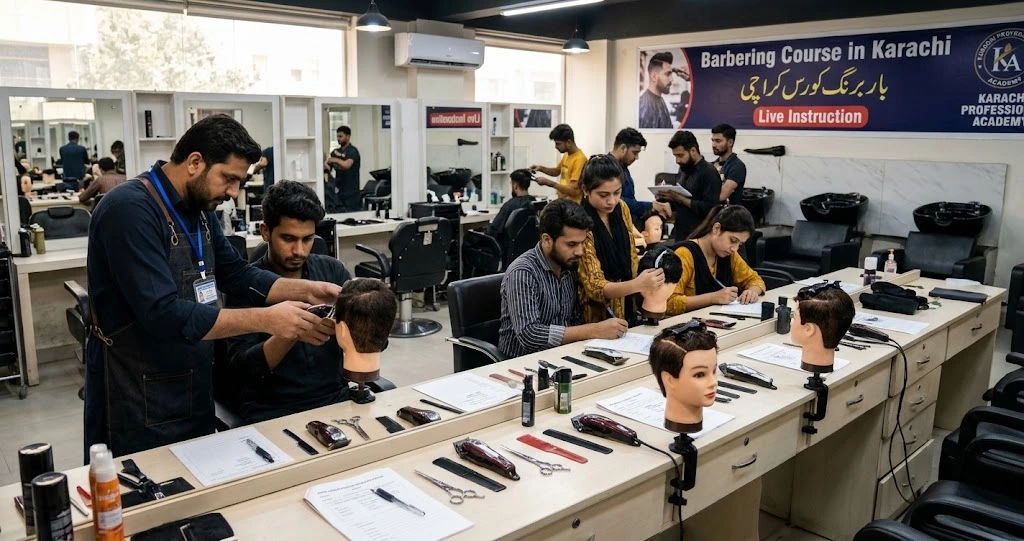 It involves learning different techniques, understanding hair types, maintaining hygiene, and developing strong customer service skills.
A professional training programme helps students build these abilities through practical lessons and guided instruction. A barbering course in Karachi is designed to introduce beginners to essential barbering techniques while helping experienced individuals improve their existing skills. Students learn how to handle professional tools, perform different haircuts, shape beards, and provide grooming services according to customer preferences.
Whether someone wants to work in a modern barbershop, establish a personal grooming business, or develop barbering as a long-term career, proper training can provide a useful foundation. Understanding the skills taught during training can help students decide whether this profession matches their interests and career goals.
The Basics of Professional Barbering
The first stage of barber training usually focuses on introducing students to the barbering profession. Before performing complicated haircuts, learners need to understand the basic principles of men's grooming.
Students become familiar with the responsibilities of professional barbers and learn how different grooming services are performed.
Introduction to Barbering Tools
One of the first skills students develop is learning how to use barbering equipment correctly.
Common tools include:
-
Hair clippers and different clipper guards.
-
Professional hair-cutting scissors.
-
Thinning scissors.
-
Straight razors.
-
Electric trimmers.
-
Barber combs and brushes.
-
Neck dusters.
-
Hair dryers.
-
Spray bottles and sectioning clips.
Students learn the purpose of each tool and how to select the appropriate equipment for different services.
For example, clippers are commonly used for short haircuts and fades, while scissors provide better control when reducing length or creating texture.
Understanding these tools helps students work confidently and avoid unnecessary mistakes.
Hair Types and Textures
Not every customer has the same hair type. Some people have straight hair, while others have curly, wavy, thick, or fine hair.
A barber must understand these differences before recommending a haircut.
Training introduces students to different hair textures, growth patterns, and common grooming challenges.
They learn how hair thickness and natural direction can affect the final appearance of a haircut.
This knowledge helps barbers recommend suitable styles and deliver results that match individual customer needs.
Learning Different Haircutting Techniques
Haircutting is one of the most important practical skills taught during professional barber training.
Students learn how to create different hairstyles using scissors, clippers, and other professional equipment.
A good barber should be able to perform both traditional and modern haircuts.
Basic Haircutting Skills
Beginners usually start with simple haircutting techniques before moving towards advanced styles.
These techniques may include:
-
Cutting hair to a specific length.
-
Creating clean and even lines.
-
Dividing hair into manageable sections.
-
Using scissors for controlled trimming.
-
Working with clipper guards.
-
Blending different hair lengths.
-
Maintaining balance between both sides.
Students practise these techniques repeatedly to improve their accuracy and confidence.
They also learn how to communicate with customers before starting a haircut so that the desired length and style are clearly understood.
Learning Fade Haircuts
Fade haircuts are popular among customers who prefer modern and stylish appearances.
A fade involves gradually blending shorter hair into longer hair, creating a smooth transition.
During a barbering course in Karachi, students may learn several types of fades, including:
-
Low fade.
-
Mid fade.
-
High fade.
-
Skin fade.
-
Taper fade.
-
Drop fade.
Each style requires a different approach.
Students practise using clipper guards, adjusting cutting angles, and removing visible lines between different hair lengths.
Learning fades takes patience because even small mistakes can affect the overall appearance.
With regular practice, students become better at producing smooth and balanced results.
Scissor Cutting and Layering
Although clippers are important, professional barbers also need strong scissor-cutting abilities.
Scissor techniques are useful for customers who prefer longer hairstyles or textured finishes.
Students learn how to hold scissors properly, control their movements, and remove hair evenly.
They may also practise basic layering and texturising techniques.
These skills help create natural-looking hairstyles with better shape and movement.
Beard Trimming and Shaping Skills
Beard grooming is another major part of professional barbering.
Many customers visit barbershops specifically for beard maintenance, shaping, and trimming.
A professional barber must understand how to create different beard styles according to facial structure and personal preferences.
Beard Trimming Techniques
Students learn how to use beard trimmers, scissors, and combs to maintain different beard lengths.
They practise removing excess hair while keeping the beard neat and balanced.
Training may include:
-
Short beard trimming.
-
Long beard maintenance.
-
Stubble grooming.
-
Sideburn trimming.
-
Mustache shaping.
-
Beard length control.
-
Neckline maintenance.
Students also learn how to work carefully around sensitive facial areas.
The objective is to achieve a clean appearance without removing more hair than necessary.
Creating Suitable Beard Shapes
Different beard styles suit different face shapes.
For example, some beard designs can make a round face appear longer, while others can add definition to a narrow face.
Students learn basic facial-shape assessment and how beard proportions affect overall appearance.
They may practise popular styles such as boxed beards, goatees, full beards, and short corporate beard designs.
These skills allow barbers to offer more personalised grooming services.
Professional Shaving Techniques
Traditional shaving remains an important service in many barbershops.
Professional training introduces students to safe shaving practices and proper razor handling.
Straight Razor Handling
Students learn how to hold and control a straight razor safely.
They are introduced to the correct shaving angles, controlled movements, and preparation methods.
A straight razor requires careful handling because incorrect movements can cause cuts and irritation.
Practical instruction helps students understand how to work around the jawline, cheeks, and neck.
Preparing the Skin Before Shaving
Proper skin preparation improves comfort and helps reduce irritation.
Students learn about:
-
Cleansing the shaving area.
-
Applying warm towels when appropriate.
-
Using shaving creams or gels.
-
Preparing the beard.
-
Selecting suitable shaving products.
-
Following safe shaving procedures.
They also learn the importance of using clean equipment and avoiding unnecessary pressure.
After-Shave Care
Shaving does not end when the hair has been removed.
Students learn basic after-shave care, including cleaning the skin, removing product residue, and applying suitable after-shave products.
They are also introduced to common shaving concerns, such as dryness, redness, and razor bumps.
This knowledge helps them provide a more complete grooming experience.
Hair Washing and Scalp Care
A professional barber should understand basic hair washing and scalp care procedures.
These services are often included in comprehensive barber training programmes.
Shampooing and Conditioning
Students learn how to select suitable shampoos and conditioners for different hair types.
They practise applying products correctly, washing hair thoroughly, and rinsing without leaving residue.
They also learn how to handle customers comfortably during shampoo services.
Basic Scalp Knowledge
Understanding the scalp is useful because customers may have different scalp conditions.
Students are introduced to common concerns such as dryness, oiliness, and visible dandruff.
They learn the importance of choosing appropriate grooming products and maintaining clean working conditions.
However, barbers are not medical professionals. They should avoid diagnosing scalp diseases and recommend medical advice when customers have persistent or concerning symptoms.
Hair Styling and Finishing Techniques
Haircutting is only one part of professional grooming. Styling and finishing help customers achieve the appearance they want.
A barbering course in Karachi may introduce students to different styling products and methods used in modern barbershops.
Using Professional Styling Products
Students become familiar with products such as:
-
Hair wax.
-
Hair gel.
-
Pomade.
-
Hair cream.
-
Styling mousse.
-
Hair spray.
-
Texture powder.
They learn the differences between these products and how they affect hair appearance.
For example, pomade may provide a smooth finish, while texture products can help create a more natural-looking hairstyle.
Blow-Drying and Hair Setting
Blow-drying is another useful skill.
Students practise using hair dryers, brushes, and combs to create volume and direction.
They learn how heat affects hair and why appropriate temperature settings are important.
These techniques help barbers finish haircuts professionally and recommend simple styling methods customers can use at home.
Hygiene, Sanitation, and Workplace Safety
Cleanliness is essential in every professional barbershop.
Barbers work with tools that come into contact with hair, skin, and sometimes small cuts. Therefore, they must understand proper sanitation procedures.
Cleaning and Disinfecting Equipment
Students learn how to clean and disinfect reusable equipment between customers.
Important practices include:
-
Removing visible hair from tools.
-
Disinfecting appropriate equipment.
-
Cleaning workstations regularly.
-
Replacing disposable items.
-
Keeping towels clean.
-
Storing equipment properly.
-
Washing hands before and after services.
They also learn that single-use items should never be reused.
Personal Hygiene and Customer Safety
Barbers must maintain personal cleanliness and wear suitable work clothing.
Training may also introduce students to handling minor workplace accidents, disposing of contaminated materials, and following appropriate safety procedures.
Good hygiene protects both customers and professionals.
It also creates a positive impression and builds confidence in the quality of services.
Customer Communication and Consultation Skills
Technical ability is important, but communication is equally valuable.
A barber interacts with different customers every day. Understanding their preferences is necessary to deliver satisfactory results.
Customer Requirements
Before starting a haircut, barbers should ask customers what they want.
Students learn how to discuss haircut length, beard preferences, styling choices, and maintenance requirements.
They may also learn how to use reference pictures to understand a customer's expectations.
This reduces confusion and helps avoid unwanted results.
Providing Professional Recommendations
Customers sometimes know what they want but are unsure whether a particular hairstyle will suit them.
A trained barber can suggest suitable options based on hair texture, face shape, and lifestyle.
For example, someone with a busy routine may prefer a low-maintenance haircut.
Students learn to make helpful recommendations without pressuring customers into unnecessary services.
Managing Customer Feedback
Customer satisfaction is important for building a successful career.
Students learn how to listen politely, respond to concerns, and make reasonable adjustments when possible.
Professional behaviour encourages repeat visits and positive recommendations.
Facial Shapes and Personal Grooming
A good haircut should complement the customer's overall appearance.
For this reason, barber training may include basic knowledge of facial proportions and personal grooming.
Identifying Different Face Shapes
Students learn about common face shapes, including:
-
Round.
-
Oval.
-
Square.
-
Rectangle.
-
Diamond.
-
Heart-shaped.
They explore how different hairstyles and beard designs can affect facial proportions.
This knowledge helps them recommend styles that suit individual customers rather than offering the same haircut to everyone.
Matching Hairstyles with Personal Preferences
A customer's age, profession, daily routine, and personal style can influence their grooming choices.
Students learn to consider these factors when suggesting suitable hairstyles.
This develops their ability to provide personalised services.
Developing Speed, Accuracy, and Confidence
Professional barbering requires a balance between speed and quality.
Customers appreciate efficient services, but rushing through a haircut can lead to uneven results.
Training programmes help students develop better control and confidence through repeated practice.
Improving Hand Coordination
Using clippers, scissors, and razors requires coordination between the eyes and hands.
Students practise controlling tools while maintaining the correct cutting angle.
Regular exercises help improve accuracy and reduce unnecessary movements.
Managing Time During Services
Students learn how to organise their work and complete common grooming services within reasonable timeframes.
They practise preparing equipment before customers arrive and keeping their workstations organised.
With experience, they become more efficient without compromising service quality.
Learning Professional and Business Skills
Barbering can become a source of income through employment or self-employment.
Some training programmes therefore introduce students to basic business and workplace management.
Barbershop Operations
Students may learn how a professional barbershop operates.
Topics can include appointment management, customer records, service pricing, and workstation organisation.
They also learn why punctuality and professional behaviour matter in a service-based business.
Building Customer Relationships
Maintaining customer relationships is important for long-term success.
Students learn how to encourage repeat visits through consistent service quality, respectful communication, and personalised grooming recommendations.
Satisfied customers can help a barber develop a strong reputation.
Starting an Independent Barbering Business
Some learners eventually want to open their own barbershops.
Depending on the training provider, introductory business lessons may cover:
-
Selecting suitable equipment.
-
Understanding startup expenses.
-
Managing service prices.
-
Maintaining inventory.
-
Promoting grooming services.
-
Creating a professional business environment.
Advanced financial and business management training may require additional courses or practical experience.
Practical Training and Hands-On Experience
Practical experience is one of the most valuable parts of barber education.
Students cannot become skilled professionals simply by watching demonstrations or reading instructions.
They need opportunities to perform techniques themselves.
Practising on Training Heads
Many programmes begin with mannequin or training heads.
These provide a suitable environment for practising basic cutting, sectioning, and styling techniques.
Students can repeat exercises and correct mistakes before working with customers.
Supervised Practical Sessions
As students improve, they may receive opportunities to practise on models or customers under supervision.
Instructors observe their techniques and provide feedback.
They may correct clipper handling, cutting angles, beard proportions, and finishing methods.
This helps students understand how professional standards are maintained in real working environments.
Building a Professional Portfolio
Students can photograph suitable completed haircuts and grooming styles to create a portfolio, with appropriate permission from clients or models.
A portfolio provides visual evidence of their developing abilities.
It can also help when applying for jobs or promoting independent barbering services.
How to Choose the Right Barber Training Programme in Karachi
Not every training institute offers the same curriculum.
Before enrolling, students should carefully compare available programmes.
Check the Course Curriculum
Look for a programme that covers essential skills, including haircutting, fades, beard grooming, shaving, hygiene, and styling.
A comprehensive curriculum should combine theoretical knowledge with practical instruction.
Ask About Practical Training
Find out how much time students spend practising with professional tools.
A course that focuses mainly on demonstrations may not provide enough experience.
Ask whether supervised practice on models or customers is included.
Evaluate Instructor Experience
Experienced instructors can demonstrate professional techniques and explain common mistakes.
Students should look for trainers who have practical barbering knowledge and can provide individual feedback.
Certification and Career Support
Ask whether the institute provides a certificate after successful completion.
Students should also check whether the programme offers career guidance, job placement assistance, or opportunities for further training.
A certificate can demonstrate course completion, but practical ability and professional experience remain important when seeking employment.
Career Opportunities After Learning Barbering Skills
Completing professional training can help students explore different opportunities in the grooming industry.
The career path depends on individual skills, experience, and business goals.
Working in Professional Barbershops
Newly trained barbers may apply for entry-level positions in established grooming businesses.
Working alongside experienced professionals can improve their technical abilities and customer-handling skills.
Becoming a Freelance Barber
Some professionals prefer offering grooming services independently.
Freelance barbers may provide appointments at customers' homes or work through personal booking arrangements.
They need suitable equipment, strong hygiene practices, and reliable customer communication.
Opening a Personal Barbershop
With sufficient experience and business knowledge, a barber may establish an independent grooming salon.
This requires investment in equipment, furniture, supplies, and business operations.
A strong customer base and consistent service quality can contribute to long-term success.
Developing Advanced Grooming Skills
Barbers can continue learning specialised techniques after completing basic training.
Advanced fades, creative designs, modern styling, and specialised beard grooming can help professionals expand their services.
Continuous learning is important because customer preferences and grooming trends change over time.
Conclusion
Barbering is a practical profession that combines creativity, technical knowledge, communication, and personal grooming expertise. Becoming a professional barber requires more than learning how to cut hair. Students must understand different hair textures, master clipper and scissor techniques, shape beards, perform safe shaving services, and maintain high standards of cleanliness.
A barbering course in Karachi can provide beginners with a structured introduction to these essential skills while helping experienced individuals improve their techniques. Students may learn traditional and modern haircuts, fade techniques, beard styling, hair washing, scalp care, and professional finishing methods. They can also develop important abilities such as customer consultation, time management, and workplace organisation.
Practical training is particularly important because barbering requires regular hands-on experience. Working with training heads, practising under instructor supervision, and receiving constructive feedback can help learners improve their accuracy and confidence.
Choosing the right institute also makes a difference. Students should compare course content, practical training opportunities, instructor experience, certification, and career support before making an enrolment decision.
Ultimately, barbering can offer rewarding career opportunities for people who enjoy working with their hands, interacting with customers, and creating professional grooming styles. With proper training, regular practice, dedication, and a willingness to learn new techniques, students can develop the foundation needed to work in established barbershops, offer freelance services, or eventually establish their own grooming businesses.
A successful barber is not simply someone who knows how to cut hair. A successful barber understands customer needs, maintains professional standards, and consistently delivers quality grooming services.