
What is cloud based Mobile App Gaming?
Cloud technology has changed how people access entertainment, store information, and use digital services. Gaming is one of the industries benefiting significantly from these developments. Traditionally, mobile games depended on the processing power, storage capacity, and graphics capabilities of smartphones and tablets. However, cloud technology has introduced a different approach that allows players to enjoy games without relying entirely on their devices' hardware.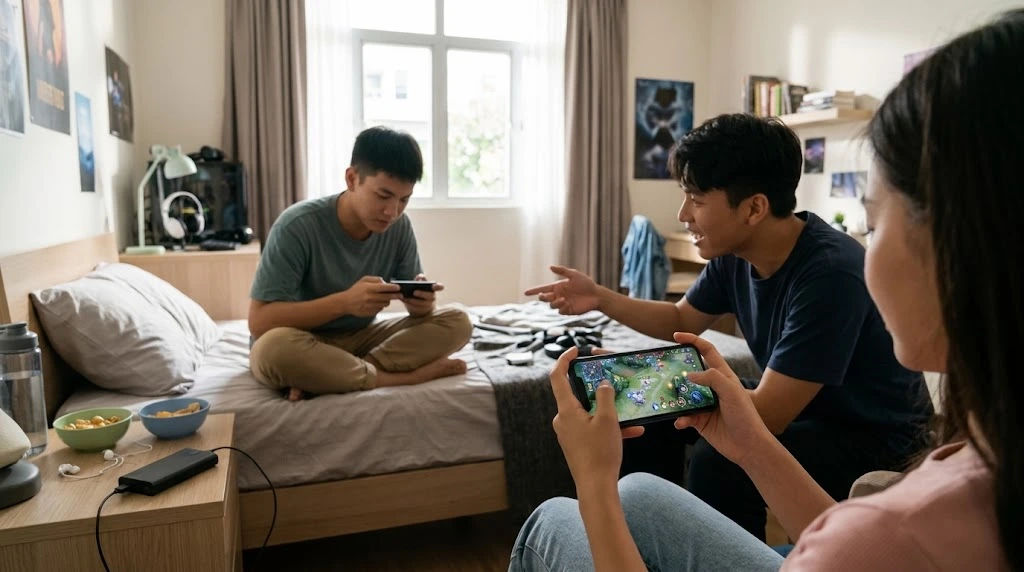
Cloud-based gaming is becoming an important part of modern Mobile App Gaming because it allows demanding games to run on remote servers rather than directly on smartphones. Instead of downloading and installing large game files, players can stream gameplay through an internet connection. This approach makes advanced gaming experiences more accessible to people who own devices with limited processing power.
Understanding how cloud gaming works can help players make better decisions about their devices, internet connections, gaming subscriptions, and entertainment preferences. It also explains why developers and technology companies are investing in cloud infrastructure to improve gaming experiences.
Cloud-Based Mobile Gaming
Cloud-based mobile gaming is a technology that allows players to enjoy video games through remote servers connected to the internet. Rather than processing every gaming activity directly on a smartphone, powerful computers located in data centres handle much of the work.
The server processes the game and sends the resulting video and audio to the player's device. The player interacts with the game using touchscreen controls, a controller, or another supported input method.
These commands travel through the internet to the remote server, where the game responds. The updated gameplay is then streamed back to the smartphone.
This process happens continuously, creating an experience similar to playing a game installed directly on a device.
How Is It Different From Traditional Mobile Gaming?
Traditional mobile games require smartphones to perform most of the important processing activities. The device runs the game software, generates graphics, manages gameplay, and stores necessary files.
Cloud gaming works differently because remote servers handle demanding processing tasks.
Mobile App Gaming pkr98 differences include:
-
Processing: Traditional games use local device hardware, while cloud games rely heavily on remote servers.
-
Storage: Traditional games often require substantial installation space, whereas cloud gaming generally requires less local storage.
-
Graphics: Cloud servers can support demanding graphics that weaker smartphones might struggle to process independently.
-
Internet: Traditional games can sometimes operate offline, but cloud gaming usually requires a stable internet connection.
-
Updates: Cloud platforms can manage many game updates through their servers.
Both approaches have advantages, and the better option depends on individual requirements.
How Does Cloud-Based Mobile App Gaming Work?
Cloud gaming combines several technologies to deliver interactive entertainment through internet-connected devices. Although the process may appear complicated, the basic concept is relatively simple.
A remote computer runs the game, captures its output, and streams that output to the player's smartphone.
Remote Gaming Servers
Remote servers are the foundation of cloud gaming. These powerful computers contain processors, graphics cards, memory, and other hardware designed to run demanding applications.
When a player selects a game, the cloud platform starts the required gaming environment on one of its servers.
The server processes the game, manages its virtual environment, and generates the images displayed to the player.
Because the smartphone does not perform all these demanding tasks, even relatively affordable devices may support games that would otherwise require more powerful hardware.
Video and Audio Streaming
After processing the game, the server converts the visual output into a compressed video stream.
This stream travels through the internet to the player's smartphone. The device receives the information and displays the gameplay through its screen.
Audio is delivered through the same general streaming process.
Modern compression technologies help reduce the amount of data required to deliver smooth visuals. However, streaming quality still depends on available internet bandwidth and network conditions.
Player Input and Response
Cloud gaming also needs a reliable way to communicate player actions.
For example, when someone moves a character using touchscreen controls, the smartphone sends that command to the remote server.
The server processes the action and generates a new image showing the result. That image is streamed back to the device.
The time required to complete this process is called latency.
Low latency is especially important in racing, shooting, fighting, and competitive multiplayer games because even small delays can affect gameplay.
Key Benefits of Cloud-Based Mobile App Gaming
Cloud gaming offers several benefits that make it attractive to modern players. These advantages are particularly useful for people who want access to advanced games without purchasing expensive smartphones.
Reduced Storage Requirements
One of the biggest challenges associated with traditional mobile games is storage consumption.
Modern games can contain high-quality graphics, audio files, animations, maps, and downloadable content. As a result, some titles require several gigabytes of storage.
Cloud gaming reduces the need to download complete game installations onto smartphones.
Players can stream supported games instead of keeping large game files locally. This can leave more storage available for photographs, videos, documents, and other applications.
However, some cloud gaming applications still require installation space for their software, temporary files, and cached information.
Access to Advanced Graphics
Not every smartphone has a powerful graphics processor.
Traditional gaming performance depends heavily on device specifications. Older or budget smartphones may struggle with demanding visual effects, detailed environments, and high-resolution graphics.
Cloud gaming changes this limitation by moving much of the graphics processing to remote servers.
A compatible smartphone can display graphics generated by more powerful hardware without performing all the rendering work itself.
This makes advanced gaming experiences accessible to a wider range of devices, although streaming resolution and quality still depend on the platform and network.
Less Dependence on Expensive Hardware
Purchasing a high-performance smartphone specifically for gaming can be expensive.
Cloud platforms may provide another option for players who want to access demanding titles without upgrading their devices.
Instead of relying entirely on local hardware, users can access games through supported cloud services.
This can reduce the importance of buying a phone with the latest graphics processor.
Nevertheless, the smartphone still needs a compatible operating system, a suitable display, sufficient memory, and reliable internet connectivity.
Convenient Game Access
Cloud platforms can make accessing supported games more convenient.
Players may be able to open a gaming application, select a title, and start playing without waiting for a large download.
This is particularly useful when someone wants to try different games without filling their device with multiple installations.
Some services also support saved progress across compatible devices, allowing players to continue their gaming sessions from another supported screen.
Important Technologies Behind Cloud Gaming
Cloud gaming depends on several technologies working together. Each component contributes to the quality, speed, and reliability of the experience.
High-Speed Internet Connections
Internet connectivity is one of the most important requirements.
Cloud games continuously exchange information between the smartphone and remote servers. A slow or unstable connection can cause delayed controls, reduced image quality, or interruptions.
Fibre broadband, reliable Wi-Fi, and suitable mobile data connections can help improve performance.
The exact speed requirement depends on the gaming service, resolution, frame rate, and compression technology.
Players should also consider network stability rather than focusing exclusively on advertised download speeds.
Edge Computing
Edge computing brings computing resources closer to users.
Instead of sending every request to a distant data centre, an edge computing system can process information through servers located nearer to the player's geographical location.
This can reduce the distance that information travels and potentially improve response times.
For cloud gaming, lower latency can create a more responsive experience.
However, the benefits depend on server availability, network routing, and the infrastructure used by the service provider.
Video Compression Technology
Streaming high-quality gameplay requires transferring large amounts of visual information.
Video compression reduces the size of these data streams while maintaining acceptable picture quality.
Modern video codecs help platforms deliver detailed images without requiring excessive bandwidth.
Compression is particularly important for people playing through mobile networks, where data availability and connection quality may vary.
Cloud Storage and Synchronisation
Cloud storage helps gaming platforms maintain player information and game progress.
Depending on the service, saved information may include account details, achievements, preferences, and progress.
Synchronisation allows supported platforms to keep information consistent across different devices.
This means a player might start a session on a smartphone and continue on another compatible device without losing progress.
Challenges of Cloud-Based Mobile Gaming
Although cloud gaming offers several advantages, it also has limitations. Understanding these challenges helps players decide whether this technology suits their needs.
Dependence on Stable Internet
Cloud gaming generally cannot provide its intended experience without an internet connection.
Traditional games may continue working offline after installation, but streamed games depend on constant communication with remote servers.
If the internet connection becomes unstable, gameplay may freeze, disconnect, or lose visual quality.
Players in areas with unreliable connectivity may experience difficulties using cloud services consistently.
Latency and Input Delays
Latency is one of the biggest technical challenges.
Every action must travel from the smartphone to the server, get processed, and return as updated gameplay.
If this process takes too long, players may notice a delay between touching the screen and seeing the character respond.
This issue can be particularly frustrating in competitive games where quick reactions matter.
Choosing a service with nearby servers and using a reliable network can help reduce delays.
Mobile Data Consumption
Streaming gameplay can consume considerable mobile data.
Unlike traditional games that may only need an internet connection for occasional updates or multiplayer communication, cloud gaming continuously receives video and audio information.
The amount of data used depends on streaming resolution, frame rate, compression, and playing time.
For example, playing for several hours over a mobile connection may consume a significant portion of a monthly data allowance.
Players should monitor their data usage and consider Wi-Fi when available.
Service Availability
Cloud gaming depends on the infrastructure and availability of the service provider.
Some platforms may not support every country, device, or operating system.
A particular game may also be unavailable because of licensing agreements or regional restrictions.
Before subscribing, players should check supported locations, compatible devices, available games, and service conditions.
Cloud Gaming Compared With Downloaded Mobile Games
Understanding the differences between cloud gaming and traditional downloads helps players identify which approach offers the best experience.
|
Feature |
Cloud Gaming |
Downloaded Games |
|---|---|---|
|
Game processing |
Remote servers |
Local device |
|
Storage requirements |
Usually lower |
Often higher |
|
Internet requirement |
Generally continuous |
Depends on the game |
|
Graphics processing |
Mainly server-based |
Mainly device-based |
|
Data consumption |
Continuous streaming |
Often lower during offline play |
|
Device performance |
Less dependent on powerful hardware |
More dependent on device specifications |
|
Game availability |
Depends on platform catalogue |
Depends on supported installations |
Neither option is automatically better.
Players who have reliable internet and limited device storage may appreciate cloud gaming. Those who prefer offline entertainment or have limited connectivity may find traditional downloads more practical.
Devices That Support Cloud-Based Mobile Gaming
Cloud gaming is designed to work across several types of internet-connected devices. However, compatibility depends on the platform and its technical requirements.
Smartphones
Modern smartphones are among the most convenient devices for cloud gaming.
Their touchscreen displays provide a straightforward way to control games, while built-in Wi-Fi and mobile data connections allow access to streaming services.
Some games also support external controllers, which can improve control accuracy.
Players should check operating system requirements, available memory, screen compatibility, and network support before using a cloud gaming application.
Tablets
Tablets provide larger displays than most smartphones.
This can make detailed game environments easier to see and touchscreen controls more comfortable to use.
They are particularly useful for casual gaming, strategy games, and titles that benefit from additional screen space.
However, tablet compatibility still depends on the service provider.
Smart TVs and Other Connected Devices
Some cloud gaming platforms also support selected smart TVs, streaming devices, computers, and handheld gaming systems.
This allows players to access compatible games without requiring a traditional gaming console.
The availability of these features varies between platforms, so users should check device support before choosing a subscription.
How to Improve Your Cloud Gaming Experience
A few practical adjustments can make cloud gaming more enjoyable and reliable.
Use a Reliable Internet Connection
A stable connection is often more valuable than an impressive advertised download speed.
Players should choose a network that provides consistent performance throughout gaming sessions.
When possible, using a reliable Wi-Fi connection can reduce problems associated with weak mobile signals.
Reduce Network Interference
Multiple devices using the same network can compete for available bandwidth.
Streaming videos, downloading large files, and running other demanding applications may affect gaming performance.
Closing unnecessary network-intensive activities can help maintain a more consistent connection.
Select Appropriate Streaming Settings
Many cloud gaming services provide different streaming quality options.
Higher resolutions and frame rates can improve visual quality but may require more bandwidth.
If gameplay becomes unstable, reducing the streaming resolution can help maintain smoother performance.
Players should select settings that balance image quality with network reliability.
Keep Devices Updated
Smartphone operating systems and gaming applications receive updates that can improve compatibility, security, and performance.
Installing official updates can help prevent certain technical problems.
It is also important to keep sufficient free storage available for application updates and temporary files.
Is Cloud-Based Mobile Gaming Suitable for Everyone?
Cloud gaming can be useful for many players, but its suitability depends on individual circumstances.
People with reliable internet, compatible devices, and an interest in accessing demanding games may find it particularly attractive.
It can also benefit users who do not want to download large installations or purchase expensive gaming hardware.
However, players who frequently travel through areas with limited connectivity may prefer traditional offline games.
Competitive players should also consider latency carefully. Although cloud platforms continue improving their infrastructure, local processing can still provide advantages in situations where extremely fast responses are essential.
Another consideration is subscription cost. Some services require monthly payments, and users should compare the available game catalogue with the price before committing.
The Future of Cloud-Based Mobile App Gaming
Cloud gaming continues to develop as internet infrastructure, server technology, and mobile devices improve.
Faster networks and more efficient compression systems may help platforms deliver better streaming quality while reducing interruptions.
The expansion of 5G connectivity could also improve access in locations where suitable coverage is available. However, actual performance depends on network congestion, signal strength, server distance, and service quality.
Artificial intelligence may contribute to server management, streaming optimisation, and personalised gaming recommendations.
Developers may also explore ways to create games specifically designed around cloud infrastructure. Such experiences could include larger virtual environments, advanced simulations, and features that would be difficult to support on ordinary smartphones.
Cross-device gaming is another important development. Cloud platforms may increasingly allow players to move between smartphones, tablets, computers, and televisions while maintaining synchronised progress.
Despite these possibilities, challenges involving infrastructure costs, licensing, internet access, and subscription models will continue influencing the industry's development.
Conclusion
Cloud-based mobile gaming represents an important change in how people access and enjoy digital entertainment. Instead of depending entirely on smartphone hardware, this technology uses powerful remote servers to process games and stream their visual and audio output directly to compatible devices.
It offers several advantages, including reduced storage requirements, access to advanced graphics, convenient game access, and less dependence on expensive smartphones. These benefits make Mobile App Gaming more accessible to people who want enjoyable gaming experiences without investing heavily in specialised hardware.
However, cloud gaming also introduces challenges. Stable internet connectivity is essential, latency can affect responsiveness, and continuous streaming may consume substantial mobile data. Subscription costs, regional availability, and device compatibility are additional factors that players should consider.
Choosing between cloud gaming and traditional downloaded games ultimately depends on personal requirements. Players with reliable internet connections may appreciate the convenience and flexibility of streaming, while those who value offline access may prefer locally installed games.
As cloud infrastructure continues improving, this technology is likely to become an increasingly important part of the gaming industry. Understanding its benefits, limitations, and technical requirements allows players to make informed decisions and enjoy a more suitable gaming experience.

