
Which custom barber aprons suit daily work?
Choosing the right custom barber aprons is about much more than adding a name, logo, or stylish design to workwear. A barber apron needs to handle hair, water, grooming products, repeated movement, and long working hours without becoming uncomfortable. The best apron should feel like part of your daily routine rather than another piece of equipment you have to manage.
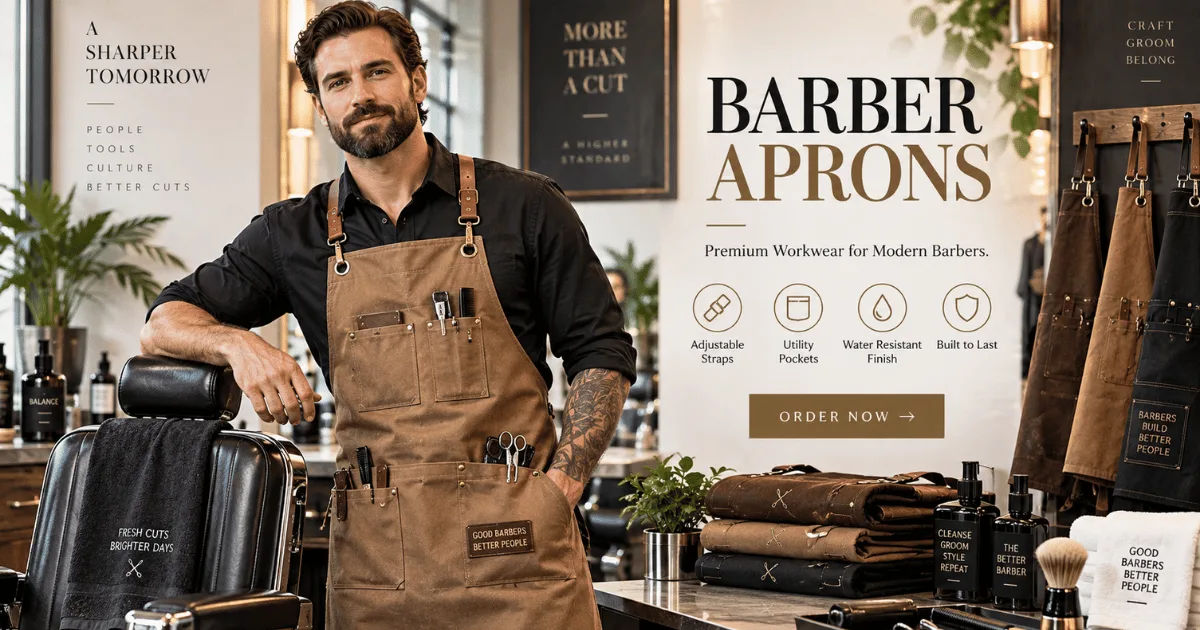
For professional barbers, details such as fabric, fit, pocket placement, strap design, durability, and cleaning requirements can make a noticeable difference. An apron that looks excellent but becomes heavy, stiff, or uncomfortable after several hours may not be practical for everyday use.
This guide explains which features make an apron suitable for daily barbering and how to choose custom barber aprons that balance comfort, protection, appearance, and durability.
What Makes an Apron Suitable for Daily Barber Work?
Daily barbering is physically active. You may spend hours standing, bending slightly toward clients, reaching for clippers, picking up scissors, cleaning tools, and moving around the workstation.
Because of this, an apron should not simply protect clothing. It should support the way you work.
A suitable daily apron should be comfortable enough for extended wear and strong enough to withstand regular cleaning. It should also provide enough coverage to protect clothing from loose hair, water, styling products, and other materials commonly used in a barbershop.
The best custom barber aprons combine practical construction with a professional appearance.
Choose the Right Fabric
Fabric is one of the most important decisions when selecting an apron for everyday work.
Different materials offer different combinations of durability, comfort, weight, and maintenance requirements.
Cotton Aprons
Cotton is popular because it feels comfortable and breathable. It can work well in shops where barbers prefer a softer, more natural material.
However, untreated cotton can absorb water and grooming products more easily than some synthetic or coated materials. It may also require more attention when washing and drying.
Cotton blends can provide a useful middle ground by combining comfort with improved durability.
Denim Aprons
Denim is a strong option for barbers who want a rugged appearance.
A quality denim apron can withstand frequent use and gives a traditional workwear feel. It also provides a good surface for embroidery, patches, and other forms of customization.
The downside is that heavier denim can become warm during long shifts.
Canvas Aprons
Canvas is known for its durability and structured feel. It is suitable for barbers who want an apron that can handle demanding daily use.
A lighter canvas may provide better comfort than extremely heavy versions. Before choosing one, consider how long you normally wear your apron and how warm your shop environment becomes.
Synthetic and Water-Resistant Fabrics
Synthetic fabrics can be useful when easy cleaning is a priority.
Some materials resist water and stains better than untreated natural fabrics. This can make them convenient when barbers frequently deal with sprays, gels, creams, and other products.
The important point is not simply choosing the most water-resistant fabric. Breathability and comfort still matter when the apron is worn throughout an entire working day.
Pay Attention to the Apron's Weight
An apron may feel fine when you first put it on but become uncomfortable after several hours.
This is especially important if it has several pockets, metal hardware, thick straps, or heavy fabric.
A daily barber apron should have enough structure to protect clothing without becoming unnecessarily heavy.
If you carry many tools, consider whether the apron itself needs to carry everything. A separate workstation or tool belt may sometimes be more comfortable than loading every item onto the apron.
Consider the Fit and Coverage
An apron should provide useful coverage without restricting movement.
It should sit comfortably around the neck or shoulders and allow the arms to move naturally. The lower portion should protect the front of your clothing while still allowing you to bend and walk comfortably.
Too much material can get in the way.
Too little coverage may leave your shirt or trousers exposed to loose hair and products.
For daily work, the best fit is usually the one that provides practical protection while remaining easy to forget about once you start working.
Neck and Shoulder Comfort Matters
The neck strap is a small feature that can have a major effect on comfort.
A narrow, rigid strap may put pressure around the neck during a long shift. Wider or adjustable straps can distribute pressure more comfortably.
Some custom barber aprons use cross-back designs that distribute the apron’s weight across the shoulders instead of relying entirely on the neck.
This can be particularly useful for barbers who wear an apron for many consecutive hours.
Before ordering a large quantity, it is worth testing a sample. A few minutes of wearing an apron will not always reveal problems, so try wearing it during a normal working session.
Choose Useful Pockets
Pockets can make an apron more practical, but more pockets do not automatically mean better design.
Think about what you actually need within reach.
A barber may want space for items such as combs, clips, small accessories, or other frequently used tools. Pocket depth and placement matter because poorly positioned pockets can interfere with movement.
Deep pockets can prevent objects from falling out, while smaller compartments can keep tools organized.
At the same time, avoid turning the apron into a storage system. Heavy tools placed around the waist can create unnecessary weight and affect comfort.
Look for Strong Stitching
An apron can have excellent fabric but still fail because of weak stitching.
Daily barbering involves repeated movement, pulling, bending, and washing. Stress points around straps, pockets, seams, and adjustment areas need strong construction.
Reinforced stitching is especially valuable around pockets because these areas experience additional strain.
When evaluating custom barber aprons, examine the stitching rather than focusing only on the fabric or printed design.
A clean appearance is useful, but construction quality is what determines whether the apron remains practical after months of use.
Select Customization That Fits the Work Environment
Customization gives a barbershop an opportunity to create a consistent professional appearance.
A logo can help establish brand recognition, while a barber's name can make individual aprons easier to identify.
However, customization should not interfere with the apron’s function.
Large decorations, excessive patches, or poorly positioned embroidery can add weight or create uncomfortable areas.
For most professional shops, simple branding works well. A logo on the chest or upper front area can look polished without dominating the design.
Embroidery or Printing?
The choice between embroidery and printing depends on the intended appearance and the apron material.
Embroidery gives a traditional, premium workwear appearance. It can be especially effective on heavier fabrics such as denim or canvas.
Printed designs can provide more flexibility with detailed graphics and larger visual elements. They may also work well when a shop wants a modern or colorful look.
Consider how frequently the apron will be washed. The customization method should be appropriate for regular cleaning and the chosen fabric.
Color Choices for Everyday Use
Color affects both appearance and maintenance.
Dark colors are often practical in barbershops because loose hair may be less visually noticeable against certain darker fabrics. Black, charcoal, navy, and deep brown can create a classic professional appearance.
Lighter colors can offer a cleaner or more distinctive aesthetic but may show stains and product marks more easily.
The right choice depends on the shop's branding and cleaning routine.
If several barbers work together, matching custom barber aprons can also create a more consistent team appearance.
Make Cleaning Easy
An apron used every day needs to be easy to clean.
Loose hair can collect on fabric, while styling products may leave residue. Over time, this can make an apron look worn even when the material itself remains strong.
Before purchasing, check the manufacturer's washing instructions.
Consider whether the apron can be machine washed, whether it needs special treatment, and whether it dries quickly.
A practical daily apron should fit naturally into your cleaning routine. If maintaining it becomes inconvenient, it may eventually receive less care than it needs.
Think About Hair Resistance
Barber hair can behave differently depending on the fabric.
Short, freshly cut hairs can become caught in textured materials. This can make cleaning frustrating.
Some smooth fabrics allow loose hair to brush away more easily.
This does not mean textured fabrics are automatically unsuitable. Durable materials such as canvas and denim can still be excellent choices. The key is understanding the balance between durability, comfort, and ease of cleaning.
A sample test can help you determine how easily hair comes off the specific fabric you are considering.
Aprons for Different Barbering Environments
Not every barber works in the same environment.
A traditional barbershop may favor rugged denim or canvas with leather-style straps and simple embroidery.
A modern salon-barbershop may prefer lightweight fabric, clean lines, and minimalist branding.
A busy shop with long shifts may prioritize breathable materials and lightweight construction.
A mobile barber may place greater importance on easy cleaning, compact storage, and reduced weight.
This is why there is no single best apron for everyone. The right custom barber aprons depend on how and where the apron will be used.
How Should Daily Barber Aprons Fit?
A good fit should allow natural movement.
The apron should not pull tightly across the shoulders when you reach forward. The straps should remain secure without digging into the skin.
The waist area should also allow you to move comfortably when bending or turning.
If you work with different clients throughout the day, adjustability is particularly useful. It allows the apron to remain comfortable over different clothing layers.
Avoid choosing an apron simply because it looks good on a product photograph. Workwear should be judged by how it performs while you are actually working.
What Features Should You Prioritize?
If you are comparing several options, start with the features that affect daily performance.
Durability
Look for strong fabric and reinforced stitching. An apron used five or six days a week needs to handle repeated wear.
Comfort
Consider weight, breathability, straps, and overall fit.
Practical Storage
Choose pockets based on tools you genuinely need nearby rather than selecting an apron simply because it has many compartments.
Easy Maintenance
An apron that can be cleaned easily is more practical for everyday professional use.
Professional Appearance
Branding should complement the apron rather than interfere with its function.
Adjustability
Adjustable straps make it easier to achieve a comfortable fit across different body shapes and clothing layers.
Are Custom Aprons Worth It for Professional Barbers?
For individual barbers, customization can provide a professional appearance and make workwear feel more personal.
For a barbershop, matching aprons can create a recognizable team identity.
There is also a practical advantage. Names or individual identifiers can make it easier to keep track of workwear when several employees share the same style.
However, customization should come after functionality.
There is little benefit in having a beautifully branded apron that is uncomfortable after two hours. Start with fabric, fit, construction, and maintenance. Then choose the branding details.
Common Mistakes to Avoid
One common mistake is choosing an apron based entirely on appearance.
A stylish apron may not have the right coverage or may use fabric that becomes too hot during long shifts.
Another mistake is selecting extremely heavy material because it seems more durable. More weight does not always equal better performance.
Overloading pockets is another issue. Carrying too many tools on the apron can place unnecessary strain on the shoulders and waist.
It is also easy to ignore cleaning requirements. An apron that requires complicated maintenance may become impractical when used frequently.
Finally, ordering a large batch without testing a sample can be risky. A sample lets you evaluate fit, fabric, pocket placement, customization quality, and comfort before committing to a larger order.
How to Choose the Best Custom Barber Aprons for Daily Work
Start by identifying your normal working conditions.
If you work long shifts in a warm shop, prioritize lightweight and breathable materials.
If durability is your main concern, consider canvas, denim, or a strong fabric blend.
If cleaning is a major concern, look for smoother or easier-care materials.
If your shop focuses strongly on branding, choose a customization method that remains professional after repeated washing.
Then test the apron in real working conditions.
Move your arms, bend forward, reach toward a client, walk around the workstation, and wear it for an extended period. These simple tests can reveal problems that are difficult to identify from product descriptions alone.
Conclusion
The best custom barber aprons for daily work are not necessarily the heaviest, most expensive, or most heavily customized options. They are the ones that quietly make a barber's working day easier.
Fabric should be durable enough for regular use while remaining comfortable for long shifts. Straps should provide a secure fit without creating unnecessary pressure. Pockets should be useful rather than excessive, and stitching should be strong enough to survive repeated movement and washing.
Customization should then add the finishing touch. A well-placed logo, name, or shop identity can create a polished appearance without sacrificing practicality.
For everyday barbering, think about the apron as work equipment rather than simply a uniform accessory. Test the fit, consider the cleaning routine, examine construction quality, and choose features based on how you actually work.
When comfort, protection, durability, maintenance, and branding are balanced properly, your apron can become one of the most useful parts of your daily professional setup.
.webp)
